Metal roof coating, repair & retrofit in Houston
Commercial metal roof coating, repair and retrofits in Houston, TX. Restoration runs $3.75 to $5.00 a sq ft against $7 to $12 to replace. Get a free roof walk.
On this page
01
Commercial metal roof coating in Houston, TX
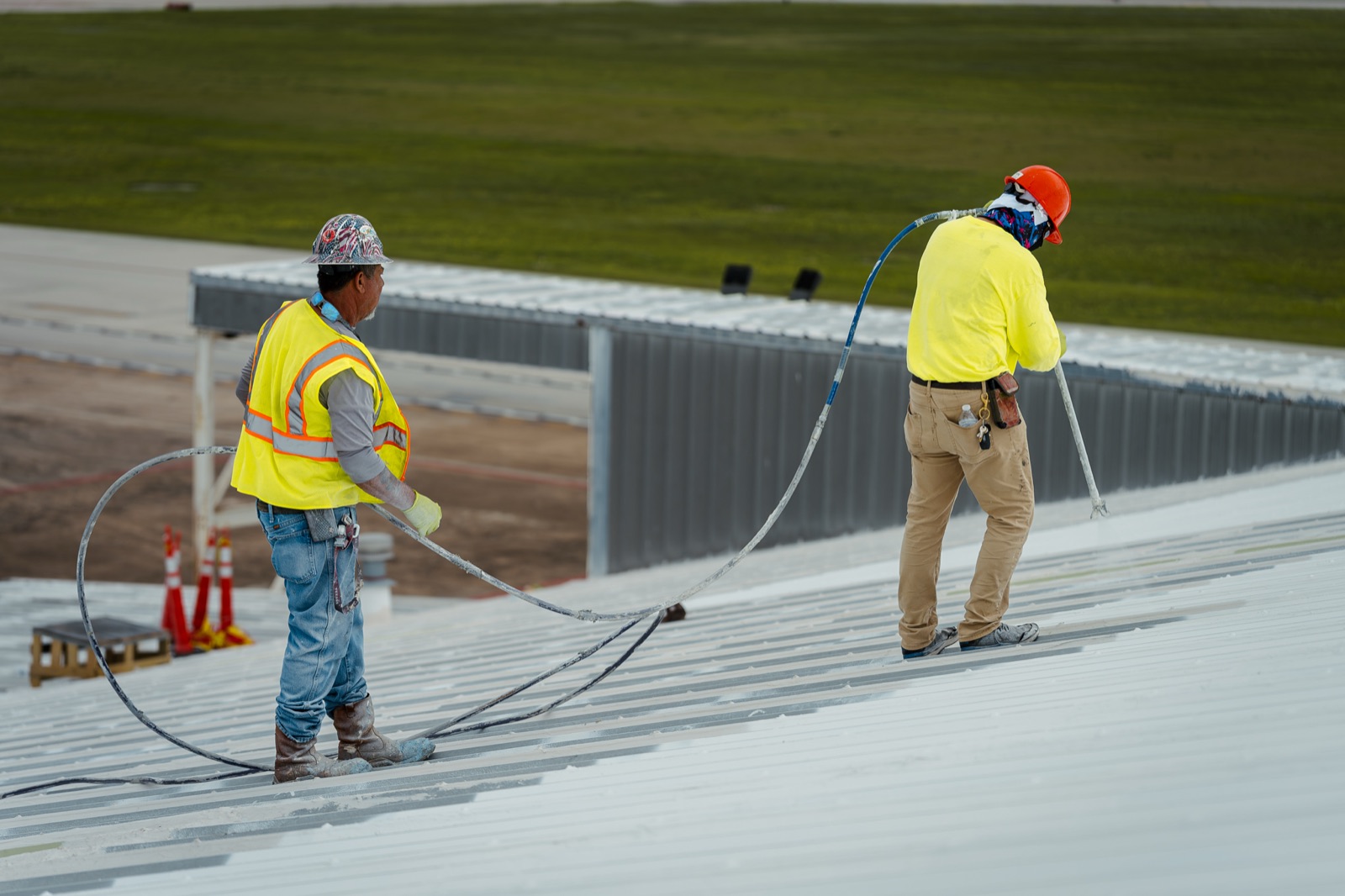
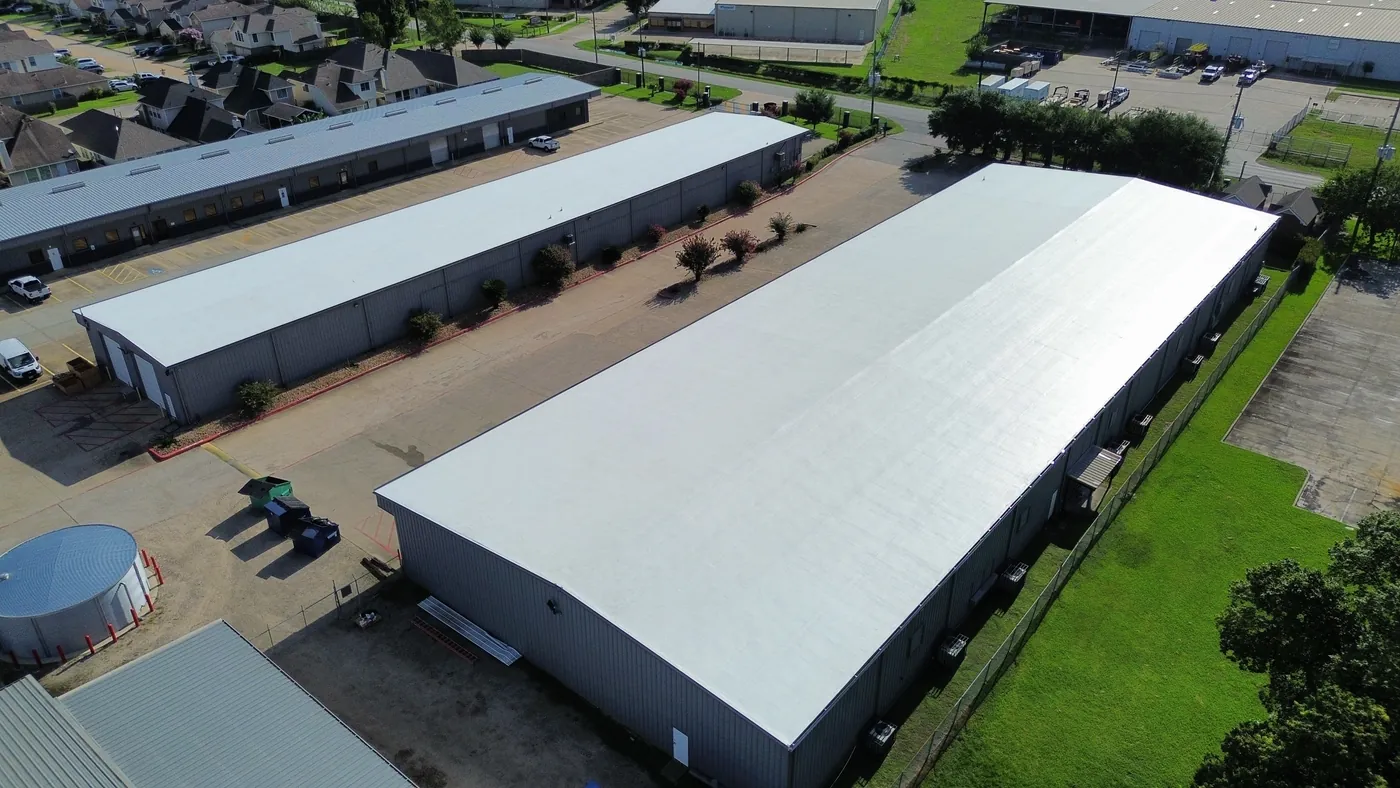
Commercial metal roof coating starts at the fasteners. Loose fasteners get tightened or replaced, the roof gets washed, rust gets treated and the seams get reinforced. Then a fluid-applied membrane goes over the whole roof. On sound panels and framing, that is a new watertight surface with no tear-off, and the building stays open.
Metal roofs are where we have chosen to focus. We coat, repair and retrofit standing seam and R-panel roofs across the Houston metro and Galveston County, from the Ship Channel corridor to the Grand Parkway. That work is on warehouses and distribution centers, pre-engineered metal buildings, manufacturing and fabrication shops, self-storage, churches and retail.
If your building has a TPO, PVC, modified bitumen or built-up roof instead, commercial roof restoration covers the same approach for those systems.
02
Is your metal roof a coating candidate?
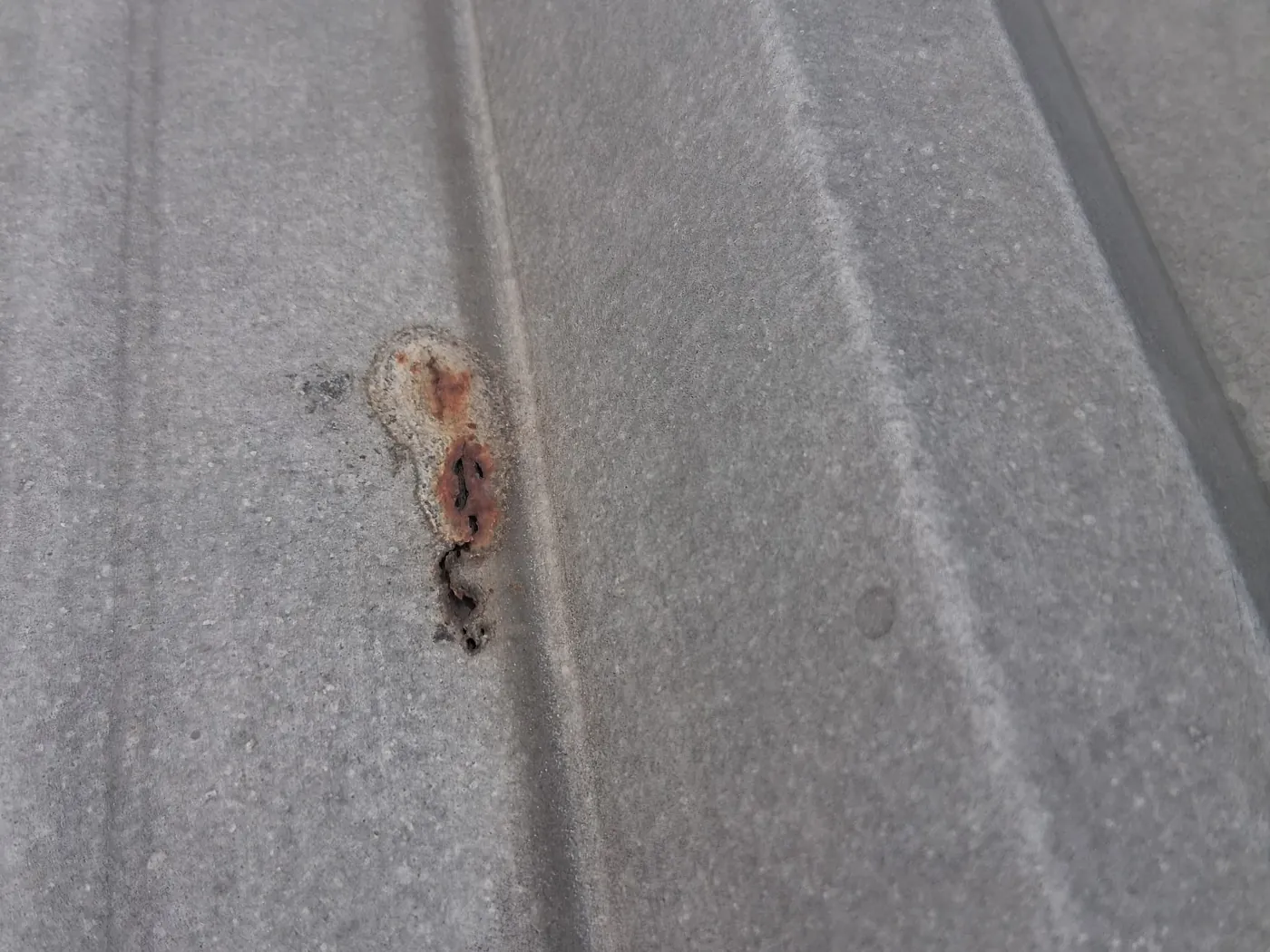
A coating goes over the roof that is already there, so three things decide whether it is worth keeping.
Rust on the surface, not through it. Surface rust is not a reason to replace a metal roof. It gets scraped or wire-brushed and primed. A panel rusted through gets that section cut out and replaced first.
Panels tight to the framing. Loose or buckled panels get refastened or replaced first, because a coating will not hold a loose panel down.
Leaks at the details: fasteners, laps, the ridge, trim, gutters and curbs. That is where metal roofs usually give up first, and what a restoration is built to fix.
Standing seam and R-panel get looked at differently. R-panel is screwed through the face of the panel, so every fastener is a hole with a washer on it. Standing seam is held by hidden clips, so its trouble is usually at the seams, ridge, panel ends and curbs.
We walk every section, check fasteners and laps by hand, and look at the panels and framing from inside the building. We check whether the rust is on the surface or through, and whether the roof has been coated before, and with what.
Not sure your metal roof is a coating candidate?
It takes a walk on the roof and a look at the underside from inside the building. We check the fasteners, the laps and the rust, photograph what we find, and tell you whether coating is on the table.
03
How a metal roof restoration is done
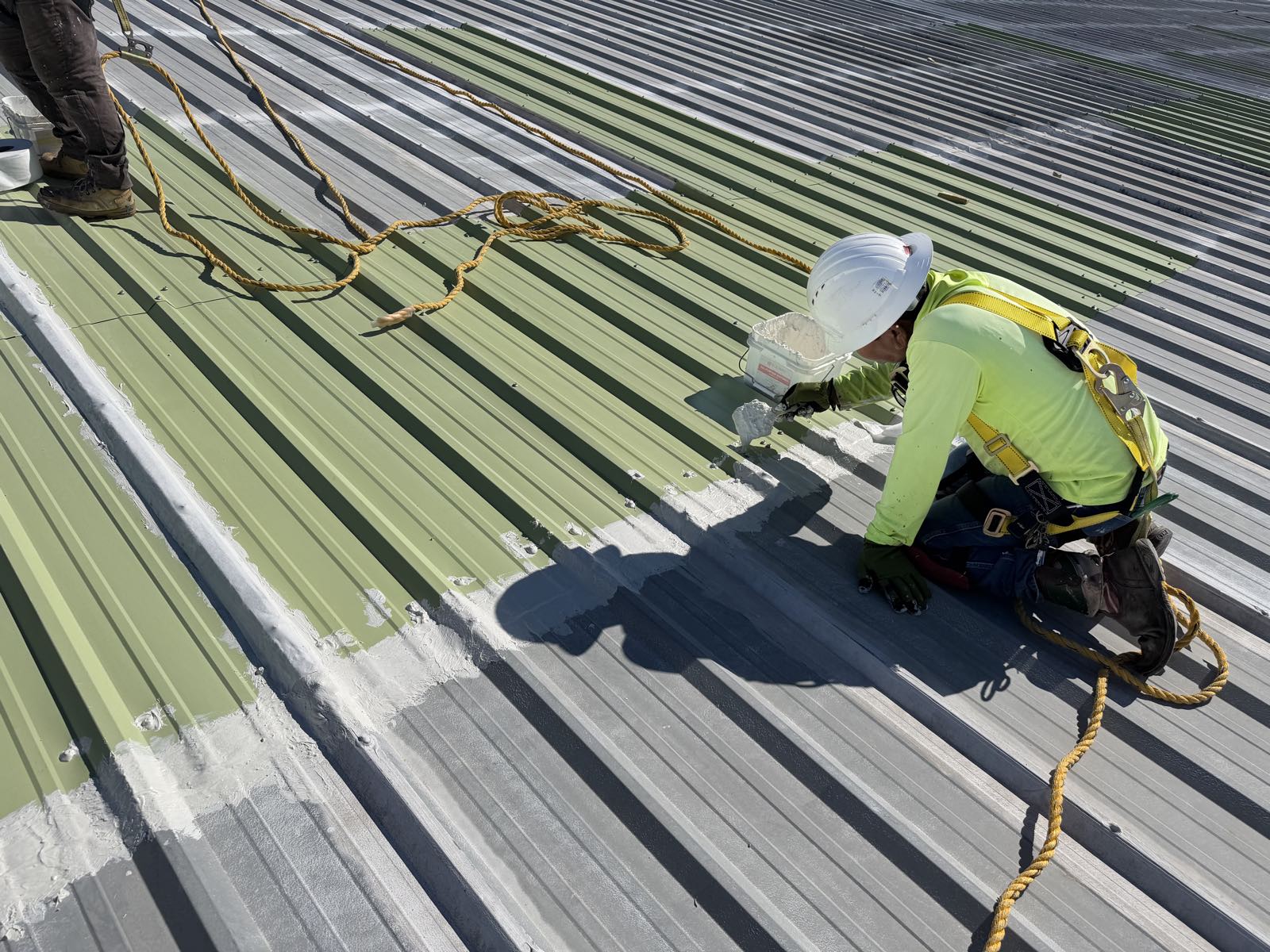
A metal roof restoration follows the manufacturer's specification for the system, in this order:
- Fasteners
- Every exposed fastener gets checked. Loose ones are tightened, and missing or rusted ones replaced. Stripped ones get a larger-diameter fastener so the new one grips, and dried-out washers get replaced. On an R-panel roof that means every screw on the roof.
- Wash
- Peeling old coating and cracked sealant come off, then the whole roof gets washed. A coating over dirt bonds to the dirt, not the metal.
- Rust
- Rust scale gets scraped or wire-brushed off and the rusted areas get a rust primer. Factory-painted panels can need a bonding primer across the whole roof. Rusted-through sections are replaced before this step, not coated over.
- Details
- Every exposed fastener head gets its own coat of sealant. The laps, ridge, trim, curbs, pipes, skylights and gutters get sealed. Depending on the system, horizontal seams also get 6-inch fabric bedded between two coats and cut around fastener heads. Most of the labor is here, because this is where metal roofs leak.
- Field coats
- Across the whole roof, over the finished details, to the thickness the manufacturer specifies for the system. Thickness is checked as the crew works, not judged by eye.
- Record
- Dated photos of the roof before, during and after, with the manufacturer and system named, ready to send to ownership.
04
Acrylic or silicone, recoating and sealing
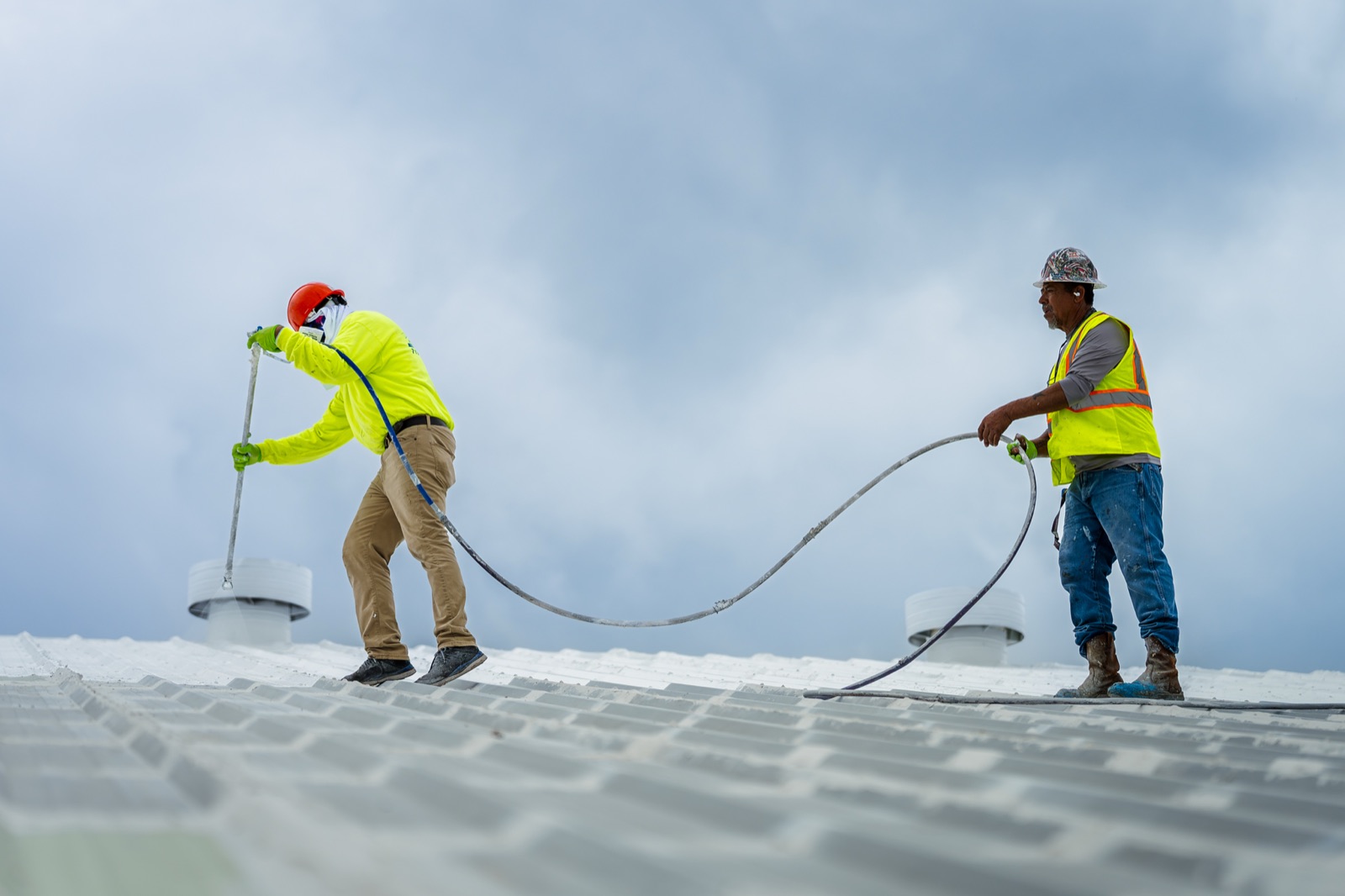
Manufacturers publish both acrylic and silicone systems over metal; Karnak, for one, lists both. Which one goes on your roof depends on its slope, how it drains, what is already on it, and how much the details move.
Acrylic is bright, white and easy to recoat, and suits a metal roof that sheds water. It will not sit under water that stays after the rain. Silicone holds up under standing water, which helps on a very low-slope roof with a few low spots. The catch lasts the life of the roof: about the only thing that bonds well to silicone is more silicone.
A metal roof gets the manufacturer's published system for metal, named in the proposal.
Metal roof recoating is the lighter job, for a coating that has chalked or worn thin but is still stuck to the roof. It gets cleaned, peeling spots come off, worn details get repaired, and a new coat goes over the top. Acrylic generally takes more acrylic. Silicone takes only silicone, and silicone over old acrylic generally needs the manufacturer's primer and an adhesion test.
Metal roof sealing usually means sealant over the screw heads and laps. On an otherwise sound roof that can be the right repair. Sealant over a loose fastener leaves a loose fastener, though, so the fasteners come first.
Not sure whether your roof was ever coated, or with what? A commercial roof inspection gives you a dated record of what is up there.
05
Commercial metal roof repair
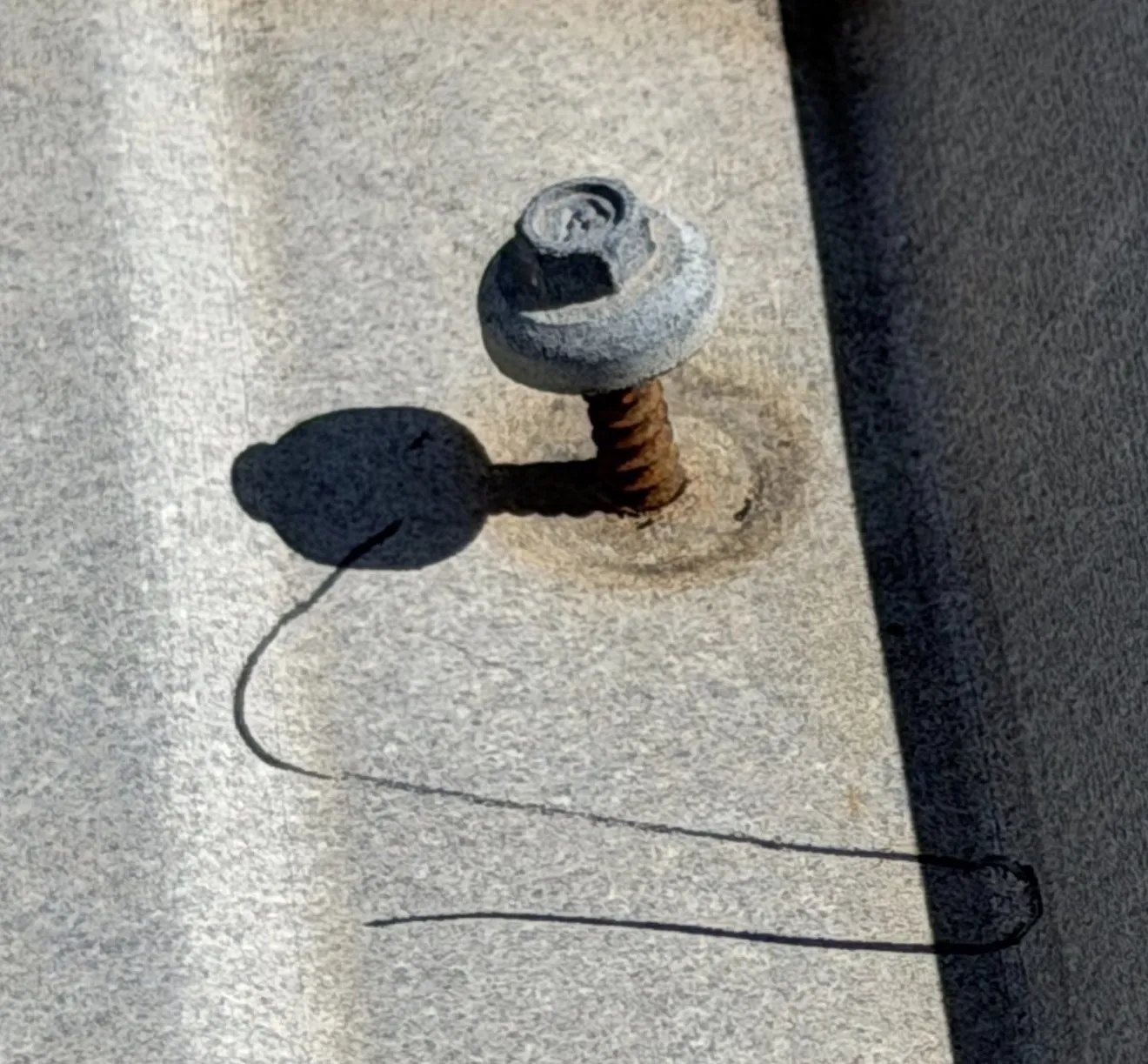
When the damage is in a few places and the rest of the roof is sound, commercial metal roof repair fixes those places and leaves the rest alone. What fails on metal roofs, and the proper fix:
- Fasteners
- Backed out, stripped or missing their washers. Tightening a stripped screw does nothing, so a larger-diameter fastener goes in with a new washer.
- Side laps and end laps
- Where panels overlap along the ribs, and where one run of panels meets the next down the slope. Sealant dries out, stitch screws loosen and the joint opens. The lap is cleaned out, refastened and resealed, and on an older roof reinforced with fabric.
- Ridge cap and trim
- Wind gets under loose trim first, and failed closures let wind-driven rain in under the ridge. Loose trim is refastened or replaced, and failed closures are replaced.
- Flashing, curbs and penetrations
- At rooftop units, exhaust fans, skylights, pipes and walls, cut into ribbed panels and easy to get wrong. Cracked pipe boots get replaced and curb flashing rebuilt. Wall flashing gets new closures and is fastened and sealed under the counterflashing, not smeared with sealant.
- Gutters and valleys
- Gutters that have pulled away or rusted at the seams, and valleys where debris collects. Seams get resealed and reinforced, rusted sections replaced and hangers refastened.
- Rusted-through panels
- Often at the laps, the panel ends and around penetrations. The rusted section is cut out, and new panel of the same profile is lapped and fastened in. Sealant over a hole is not a repair.
- Old repairs
- Tar, roof cement and caulk from past patching, each marking a place the roof failed before. It gets cleaned off so the detail underneath can be fixed.
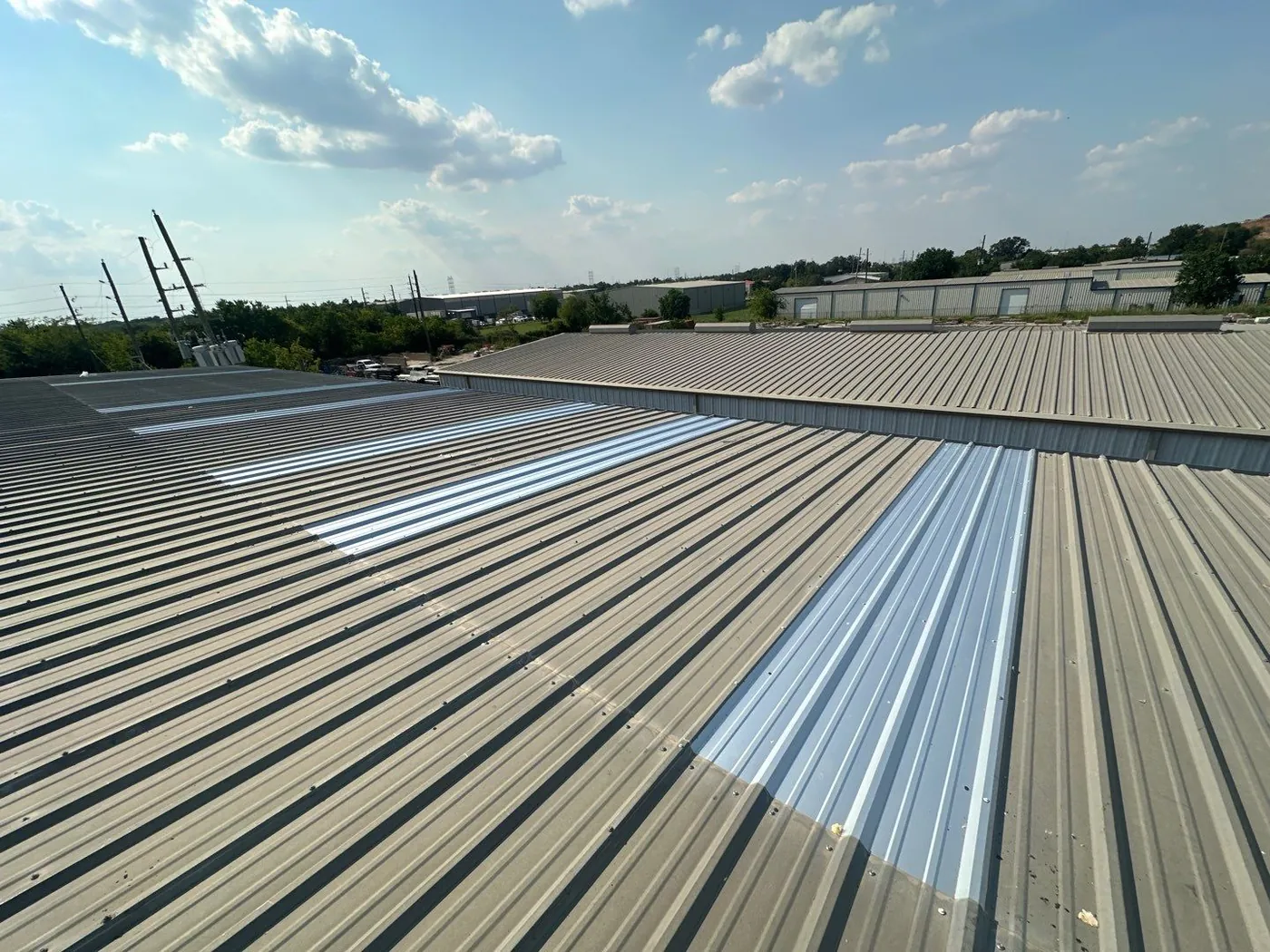
Metal repairs are priced off the damage, not per square foot. A standard commercial roof repair generally runs $1,500 to $3,500, with the photos, the scope and the price in writing before any work starts. When the same failures show up all over the roof, a restoration or retrofit is the better spend.
Water coming into the building right now? Start with emergency roof repair: same-day emergency response, with temporary protection on the roof first.
In Harris County east of State Highway 146, and in Galveston and Brazoria counties, commercial roof repairs and re-roofs can need Texas windstorm certification (WPI-8) to keep TWIA wind coverage. We do WPI-8 certified work.
For single-ply, modified bitumen and built-up roofs, the same approach is on our commercial roof repair page.
06
Metal roof retrofit: TPO or PVC over the existing metal
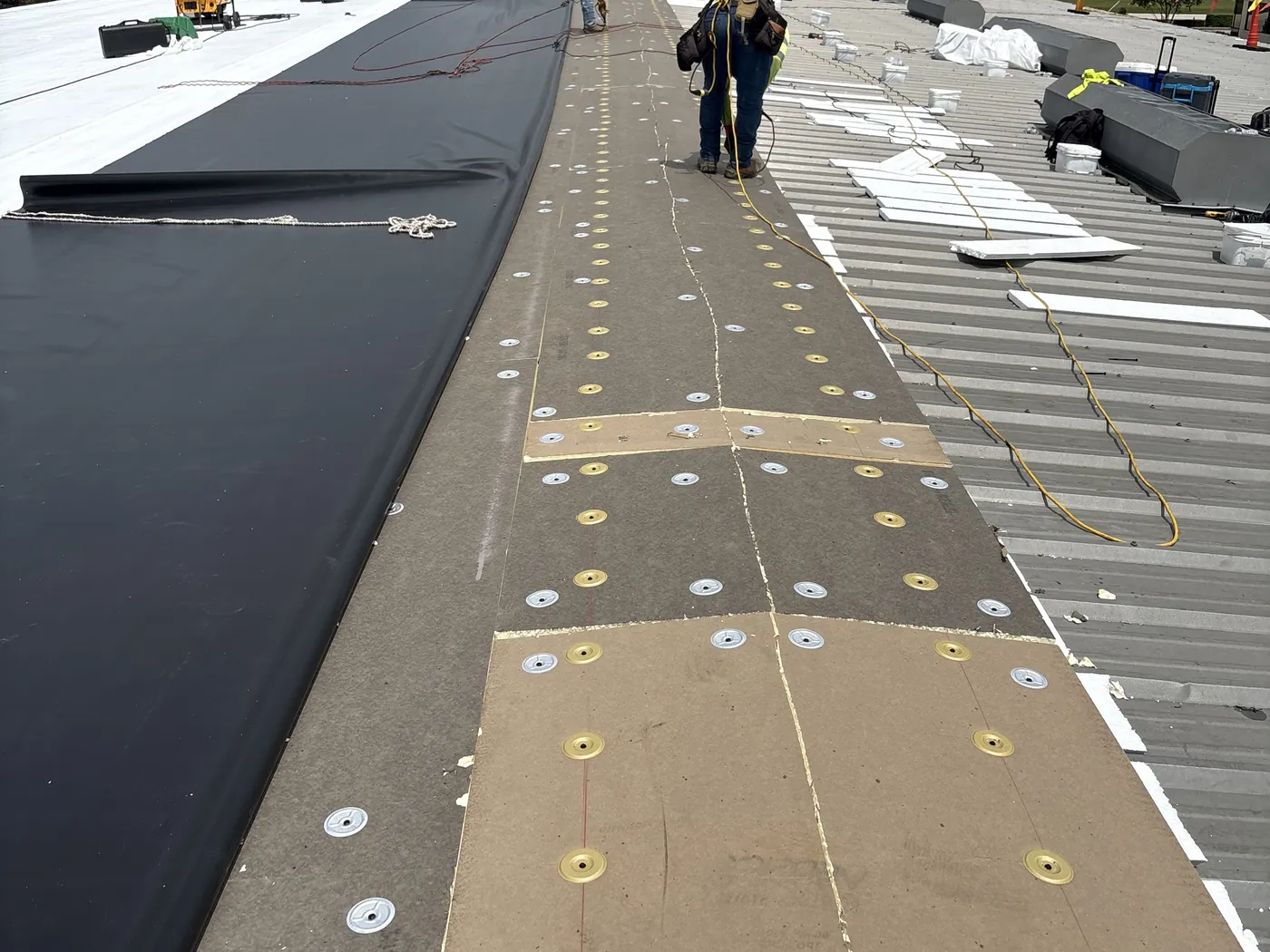
A metal roof retrofit builds a new TPO or PVC roof over the existing metal, and the metal never comes off. When the panels and the framing under them are still sound, we generally prefer a metal retrofit to tearing off sound steel for new panels. The building is never opened to the weather.
A coating gives the roof you have a new surface. A retrofit changes what kind of roof the building has. It fits leaks across the whole roof rather than at the details, a building that needs more insulation, or an owner who wants a welded membrane roof.
The build goes in layers. Insulation cut to the panel profile fills the gaps between the ribs so the top comes out flat, with more insulation over it where needed. Cover board is fastened down over that, and the TPO or PVC membrane goes on top with its seams welded with hot air. Membrane manufacturers such as Duro-Last publish metal retrofit systems along these lines.
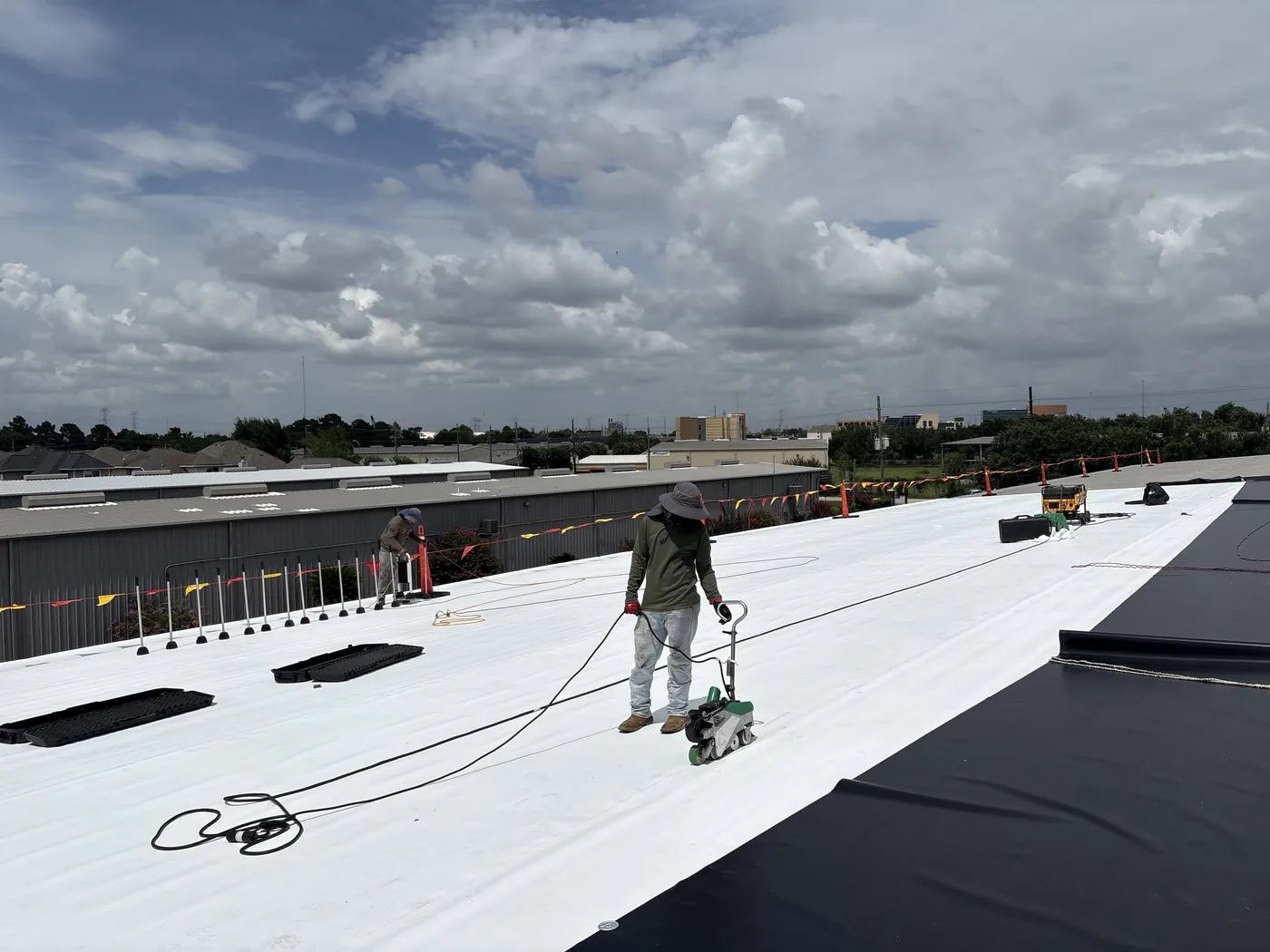
Curbs, pipes and rooftop units get flashed into the new membrane, and edges and gutters get new metal. The added height can mean raising curbs and units.
A retrofit can go on a metal roof of any slope. On a steep metal roof whose panels are not too far gone, though, we would generally coat it instead. A retrofit adds weight and is fastened through the old panels into the purlins. Any doubt that the framing can hold both goes to a structural engineer before anyone prices the roof.
Membrane manufacturers generally issue system warranties only on roofs installed by contractors they have approved. More on the membrane itself is on our TPO roofing page.
07
Repair, restore, retrofit or replace: what it costs
These are Houston-market ranges, and the shape the roof is in picks the row. Every roof still gets priced in writing after it has been walked.
- Repair
- Damage in a few places: some fasteners, a few laps, a curb, a gutter, a rusted-through panel section, with the rest of the roof sound. A standard repair generally runs $1,500 to $3,500, priced off the damage.
- Restore with a coating
- Sound panels and framing, surface rust but no widespread rust-through, and leaks at the fasteners, laps and details. A metal roof restoration runs $3.75 to $5.00 per square foot.
- Retrofit
- Sound panels and framing on a roof that needs more than a new surface, or a building that needs insulation or a membrane roof. A TPO retrofit runs $6.50 to $8.00 per square foot and PVC $9 to $12, depending on the panel profile, insulation and details.
- Replace
- Rust-through across the panels, or panels failing across the whole field. A metal roof replacement runs $7 to $12 per square foot.
- Framing problems
- Rusted purlins or sagging or moved framing go to a structural engineer first. The roof price follows the engineer's answer.
Arithmetic on those ranges, not a quote: at $3.75 to $5.00 a square foot, a 20,000 square foot metal roof comes to $75,000 to $100,000 restored. At $7 to $12, the same roof comes to $140,000 to $240,000 replaced.
Where a restoration lands in its range depends on the fastener, rust and detail work, the system and the warranty term. When the answer is a new roof, commercial roof replacement covers that decision.
Want the options priced for your metal roof?
Tell us the building and whether it is R-panel or standing seam. We walk it and put repair, restoration and retrofit side by side in writing.
08
When we won't coat a metal roof
A coating over the wrong roof is an expensive delay. Three things take a metal roof out of the running.
Rust-through across the roof, not in a few places. A few rusted-through sections get replaced and the roof gets coated. Holes all over the roof mean there is not enough sound metal left to coat.
Panels that are loose, buckled or pulling away from the framing across large areas.
Framing that is rusting, sagging or has moved. Rusted purlins go to a structural engineer, not under a coating.
If the roof is past coating, we tell you that, with the photos to show why. What is left is a retrofit if the structure is sound, or replacement if it is not.
On new panels, Wade gives the answer he gives on any roof: “I wouldn’t start with replacement. First we need to find out where the water is getting in, what shape the roof is actually in, and whether the leaks are isolated or the whole system is failing. If the roof can be repaired and bought more time, I’ll tell you that. If replacement is the smart move, I’ll show you why and give you the numbers.”
09
Choosing a metal roof coating company
A cheap metal roof bid usually leaves out the fasteners or the details. Whichever metal roof coating company you hire, get these answered in writing.
Which manufacturer and which named system, so you can look it up.
What happens to the fasteners: tightened, replaced, upsized where stripped, washers replaced. If a bid on a screw-down roof does not mention fasteners, ask why.
How the details are reinforced, and whether the seams get fabric bedded between coats or only a heavier coat.
A unit price for replacing rusted-through panel sections found during the job, so a change is priced before it happens.
Whose warranty it is: manufacturer or contractor, material only or material and labor, the term, and what it leaves out.
We install Karnak, IPC and Western Colloid coating systems. IPC is based in Pearland, Texas, and each manufacturer decides for itself whether a roof qualifies for its warranty.
Warranty conditions on a metal roof commonly include care: gutters and valleys kept clear, and storm damage reported and repaired. That upkeep is what commercial roof maintenance is for.
Ask, too, how the job runs around the building. On warehouse and industrial roofs that means dock schedules and people working underneath. On church roofs it means services and weekday programs.
Who you are dealing with
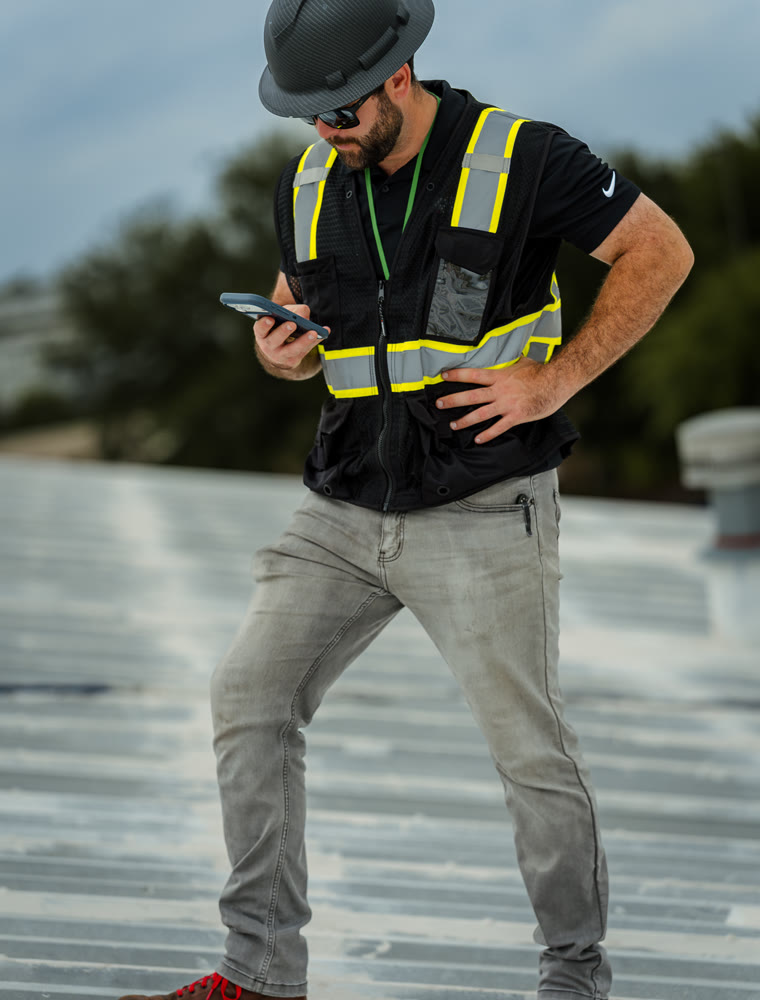
Coons Roofing is a commercial-only roofing contractor working across the Houston metro. It is owned and run by Wade Coons, who is on every project from the first roof walk to the final walkthrough. There is no salesman between you and the person who looked at your roof.
Certified applicator for Versico, FiberTite, Duro-Last, Karnak, IPC, Western Colloid, Elevate and GAF. Fully insured with general liability and workers compensation coverage.
10
Metal roof coating, repair & retrofit FAQs
How much does metal roof coating and repair cost in Houston?
A metal roof restoration in the Houston market runs $3.75 to $5.00 per square foot, against $7 to $12 per square foot to replace the same roof. Where a roof lands in that range depends on the fastener, rust and detail work, the system and the warranty term. Metal repairs are priced off the damage, and a standard repair generally runs $1,500 to $3,500. Every roof gets priced in writing after it has been walked.
Can you put TPO or PVC over a metal roof?
Yes, when the metal panels and the purlins under them are sound. That is a metal retrofit. Insulation fills the flutes so the top comes out flat, and board goes over it. A TPO or PVC membrane with welded seams goes on top, fastened through the old panels into the purlins. A TPO retrofit runs $6.50 to $8.00 per square foot and PVC $9 to $12. On sound steel, we generally prefer a retrofit to new panels.
Can you coat a rusty metal roof?
Surface rust, yes. Loose rust gets scraped or wire-brushed off and the rusted areas get a rust primer before any coating goes on. Panels rusted through in a few places get those sections cut out and replaced first. Rust-through across the whole roof, or rusted framing, means a coating is not the answer.
Do metal roof coatings come with a warranty?
They can. On the Western Colloid, Karnak and IPC systems we install, manufacturer warranties can run 10 to 20 years with no dollar limit. That means the manufacturer covers a warranted repair without capping what it pays. IPC also offers hail coverage up to 2 inches. The manufacturer approves each roof before it issues a warranty, and the term depends on the system and how it is built.
Will a white coating lower cooling costs in a metal building?
A white coating sends sunlight back off the roof instead of soaking it into the steel, which lowers the heat coming down into the building. How much shows up on the bill depends on the insulation under the panels and how much conditioned space sits below the roof. The difference is biggest on a single-story building that is air conditioned throughout, and smallest on open warehouse space.
Can the building stay open during a metal roof coating?
Yes. The roof stays on, so the building stays weathertight and open. The work needs dry weather, so Gulf Coast scheduling works around rain. On a roof around 20,000 square feet, a restoration often takes around ten days, weather permitting, and the schedule for your roof goes in the proposal. Where coating is sprayed, cars in the lot and anything near the building get protected from overspray or moved.
What areas do you cover for metal roof coating and repair?
We coat, repair and retrofit metal roofs on commercial buildings across Houston, TX, the metro and Galveston County. That includes Katy, Sugar Land, Stafford, The Woodlands, Spring, Cypress, Tomball, Conroe, Pearland, League City and Pasadena, and the Ship Channel and refinery corridor east of Houston. Form inquiries get an answer within 24 hours, usually the same day. Commercial buildings only.

Still deciding between coating, repair and retrofit?
We walk the whole roof, check the fasteners, laps and rust, and look at the underside from inside the building. Then we put the options that are really on the table side by side in writing, with the photos behind them.
11
Where we work across the metro
We cover Harris, Fort Bend, Montgomery, Galveston, Brazoria, and Waller counties. Pick your city for local detail on what we see on roofs there.
Related services

Schedule a free roof assessment
We'll walk your roof, take photos, and give you straight answers. The assessment is free when we are quoting the work.
We reply within 24 hours, usually the same day. No pressure, no sales visit you did not ask for, and we never sell your information.