Retail & strip center roofing in Houston
A leak in a strip center is a tenant problem before it is a roof problem. Grease from restaurant exhaust fans, years of foot traffic to the units, and openings nobody flashed all show up in the roof. We repair, restore and maintain retail roofs with the stores open.
On this page
01
One roof, many tenants
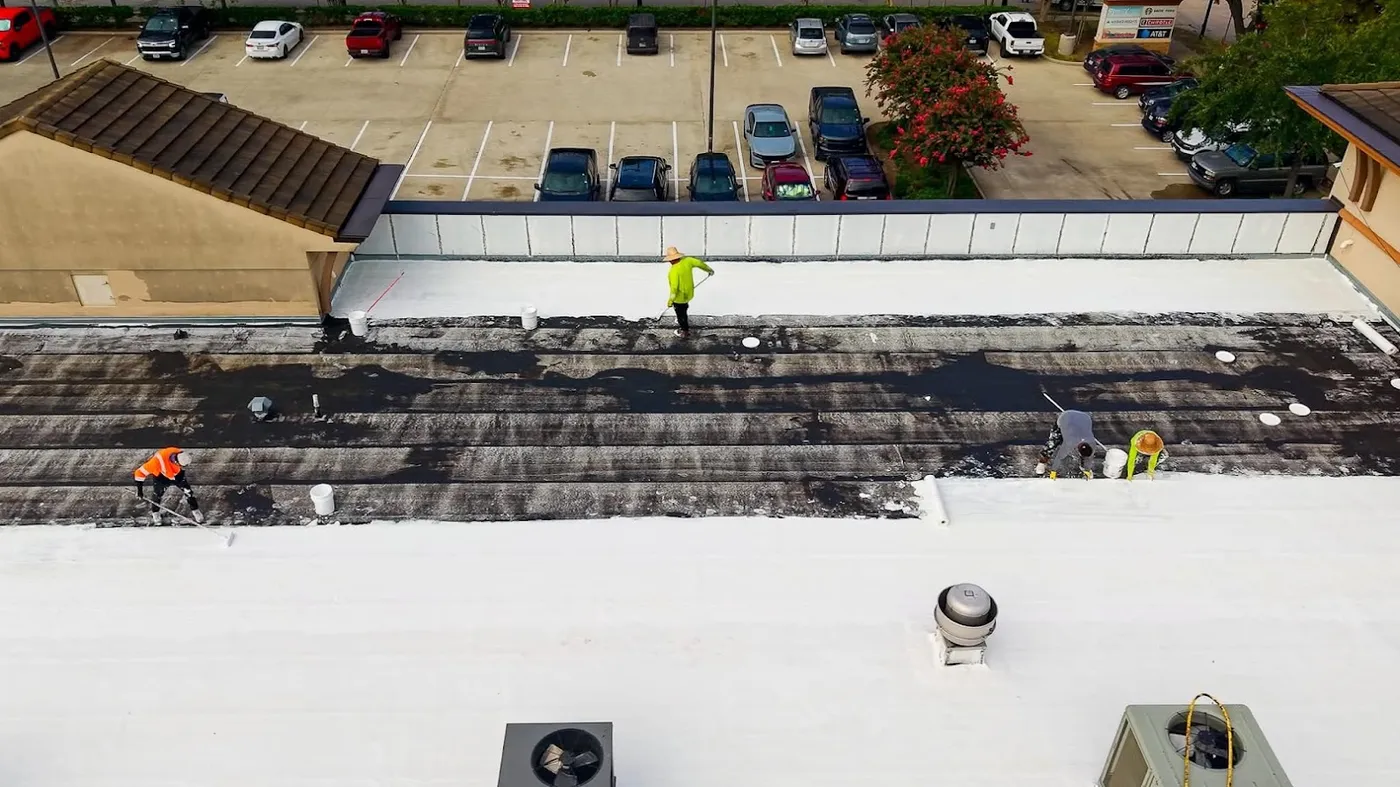
A strip center roof is a single roof with a lot of people depending on it. Every suite has a tenant, most have their own rooftop unit, and the owner, the property manager and each tenant all care what happens up there.
Water that gets in near the back wall over one suite can run along the deck and come through the ceiling of another. The tenant who calls is not always the one under the failed detail, so we walk the whole roof rather than the patch over the complaint. It helps to tell us every suite that has called, so the roof over each of them gets a close look.
On a strip center that walk covers more than the open field. The parapet walls and coping along the storefront side. The back wall, where scuppers and downspouts take the water off the roof and into the service drive. The curb under every tenant's unit. And the old patches, which on an older center are a fair map of where the roof has already failed.
Retail centers in Houston carry the full range of commercial roofs. TPO and PVC cover newer centers, modified bitumen and built-up cover older strip retail, and metal covers garden centers and older freestanding buildings. Each system wears in its own way, but the problems usually start at an edge, a seam or an opening.
If water is coming into a suite right now, that is commercial roof leak repair: call rather than send the form.
02
Restaurant bays and grease exhaust
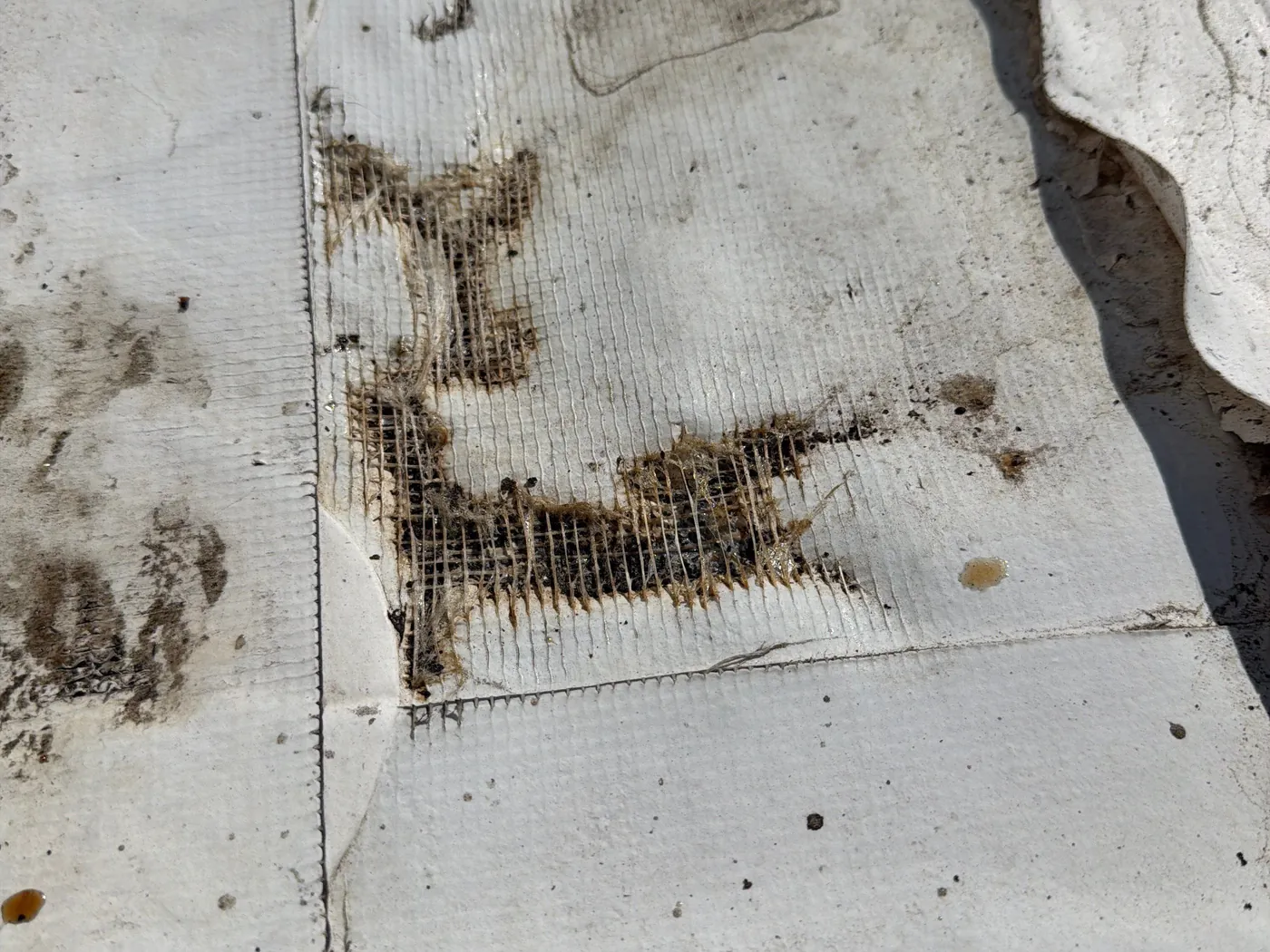
A center with a restaurant has a roof problem the rest of the building does not. The kitchen exhaust fan puts grease out onto the roof around its curb, and every rain spreads it further across the roof, often over the suites next door. The roof around the fan wears out long before the rest of the roof does, and the photograph shows where that ends: sheet worn through to the fabric inside it.
A TPO roof the grease has already worn through does not get patched. It gets re-roofed in a PVC-type membrane, because TPO and PVC cannot be welded together. More on the two membranes is on our TPO roofing page.
The fan itself, its grease containment and the hood cleaning are for the restaurant and its kitchen contractors to handle, not the roofer. Our side is the roof: we inspect the flashing and membrane around the fan curb on each visit and photograph any grease wear. That way you see it coming before the sheet wears through.
03
Rooftop traffic and added penetrations
Retail roofs get walked more than most. Every tenant's unit gets serviced, and sign and cable crews come and go. A tenant who moves out can leave behind a curb, a pipe or a dish mount that nobody uses. Each one started as a hole cut through the roof, and not every one was flashed properly.
On an older center, look for pitch pans whose filler has dried and pulled back from the pipe. Curb flashing opened at the corners where technicians kneel. Condensate lines emptying straight onto the roof and keeping one spot wet. Gas lines lying on the membrane. Screws and offcuts left behind to puncture the sheet.
Signs add openings of their own. Power for a sign runs through the parapet or the roof behind it, and brackets get screwed through coping that was meant to shed water. They are small holes, but they sit at the top of a wall, where water that gets in runs straight down behind the flashing.
Abandoned openings get cut out and the roof patched in the same material, not smeared with mastic. Pitch pans refilled or replaced. Curbs raised, and gas and condensate lines lifted onto supports, working with the tenant's HVAC contractor. On our new roofs, walkway pads to the units are standard, which gives service crews a path that is not the membrane.
Most of this is commercial roof repair. A standard repair generally runs $1,500 to $3,500, with the price in writing before work starts.
04
Scheduling around store hours
Retail roof work gets scheduled around customers. The lot is the stores' parking, entrances have to stay clear, and noise over a salon or a dining room costs that tenant business. So non-emergency work on a retail roof can be scheduled for early mornings or weekends, to stay out of store hours.
Before work starts, tell us which tenants open early and which ones are sensitive to noise or smell. Tell us where the roof access is, whether that is a hatch in a tenant's back room or a ladder from the lot. Staging, the taped-off work area and access get settled up front. Shutting down or covering rooftop units and air intakes near the work is the owner's responsibility, so plan that with your tenants before work starts. On anything bigger than a repair, we open only as much roof as we can close the same day, and nothing is left open overnight.
Some centers have a roof worn across its whole surface over a sound deck and dry insulation. There, commercial roof restoration puts a fluid-applied system over it without a tear-off. It runs $4.50 to $8.00 a square foot against $15 to $20 to tear off and replace. On TPO and PVC, a coating starts with a primer.
Between projects, commercial roof maintenance keeps a multi-tenant roof in order: scheduled visits, drains and gutters kept clear, and before and after photos of each visit.
05
Metal roofs on older retail buildings
Garden centers, older freestanding stores and some strip retail sit under screw-down metal roofs. They fail the way metal fails anywhere: fasteners backing out, laps opening, rust starting at cut edges and around every pipe and curb, and gutters overflowing along the eave.
A worn metal roof has more answers than new panels. Where the panels are rusted on the surface but still solid, a fluid-applied restoration runs $3.75 to $5.00 a square foot, against $7 to $12 to replace them. On sound steel that needs a new surface, a TPO roof built over the existing panels runs $6.50 to $8.00 a square foot, and PVC $9 to $12. We generally prefer that retrofit to new panels. Where a restaurant sits under a metal roof, a PVC retrofit also stands up to the grease.
New panels are for panels too far gone to keep. Restoration and retrofit are both covered in full on our metal roof coating page.
Who you are dealing with
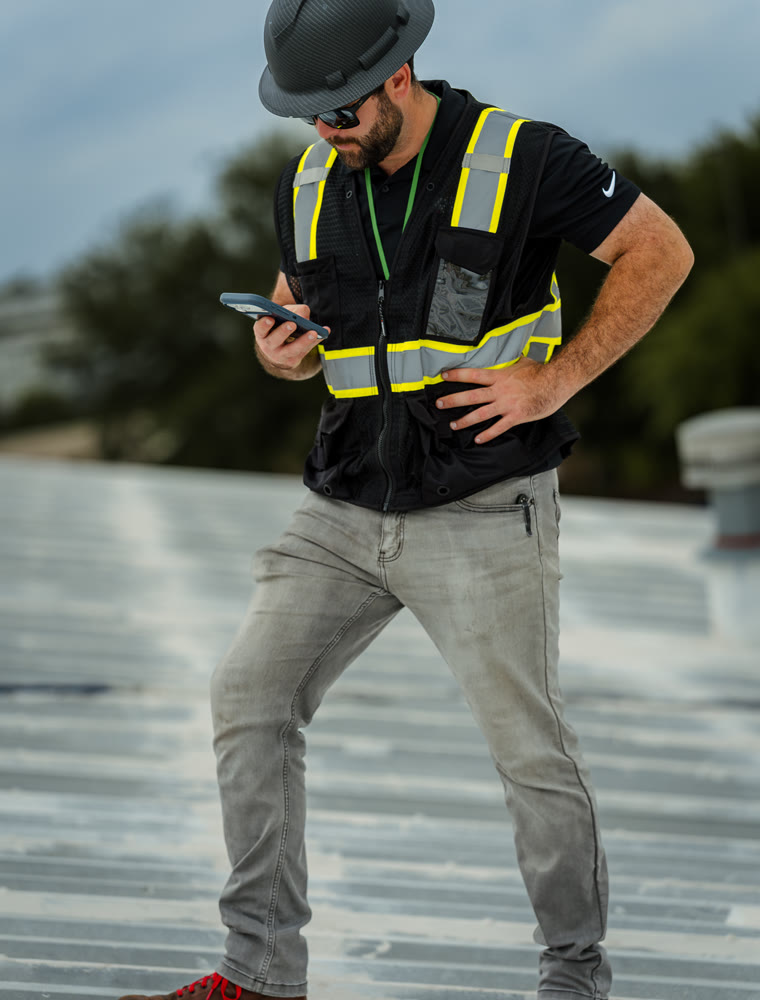
Coons Roofing is a commercial-only roofing contractor working across the Houston metro. It is owned and run by Wade Coons, who is on every project from the first roof walk to the final walkthrough. There is no salesman between you and the person who looked at your roof.
Certified applicator for Versico, FiberTite, Duro-Last, Karnak, IPC, Western Colloid, Elevate and GAF. Fully insured with general liability and workers compensation coverage.
06
Retail and strip center roofing FAQs
Can you work on our strip center roof while the stores stay open?
Yes. Repairs are local work and tenants stay open underneath. For bigger jobs, tell us which tenants open early or are sensitive to noise before anything is scheduled, and the work gets timed around them.
A restaurant's exhaust fan is wearing out the roof around it. What can be done?
The fan, its grease containment and the hood cleaning are for the restaurant and its kitchen contractors to handle. The roof around the curb is ours: its flashing and membrane get inspected and grease wear gets photographed while it is still early. A TPO roof the grease has already worn out is not a patch job; that roof gets re-roofed in a PVC-type membrane, because TPO and PVC cannot be welded together.
A tenant reported a leak. Is the problem right above their suite?
Not always. Water can travel along the deck before it comes through a ceiling, so we walk the whole roof. If water is coming in now, call 713-367-1495 for same-day emergency response, including after hours and weekends.
Can a worn strip center roof be restored instead of replaced?
It can, if the deck is sound and the insulation is dry. We check with core samples, usually two to four, each patched right away. Membrane restoration runs $4.50 to $8.00 a square foot, against $15 to $20 to tear off and replace.
A tenant moved out and left an old curb on the roof. Should it come out?
Usually, yes. An abandoned curb or pipe is a hole in the roof that no longer does anything. Cutting it out and patching the roof in the same material closes it for good, instead of leaving mastic to dry and crack.
Can the roof over one suite be fixed without redoing the whole center?
Often, yes. A repair is local work on the detail that failed, whether that is a seam, a curb or the flashing along one stretch of wall. It only becomes a whole-roof question when the same failures show up across the whole center.
07
Where we work across the metro
We cover Harris, Fort Bend, Montgomery, Galveston, Brazoria, and Waller counties. Pick your city for local detail on what we see on roofs there.
Related services

Schedule a free roof assessment
We'll walk your roof, take photos, and give you straight answers. The assessment is free when we are quoting the work.
We reply within 24 hours, usually the same day. No pressure, no sales visit you did not ask for, and we never sell your information.