Apartment & multifamily roofing in Houston
Apartment and condo communities carry several roofs on one site, often of different ages, with residents living under every one. We repair, maintain and restore multifamily roofs building by building, for the owners and property managers who run them.
On this page
01
Several roofs, one property
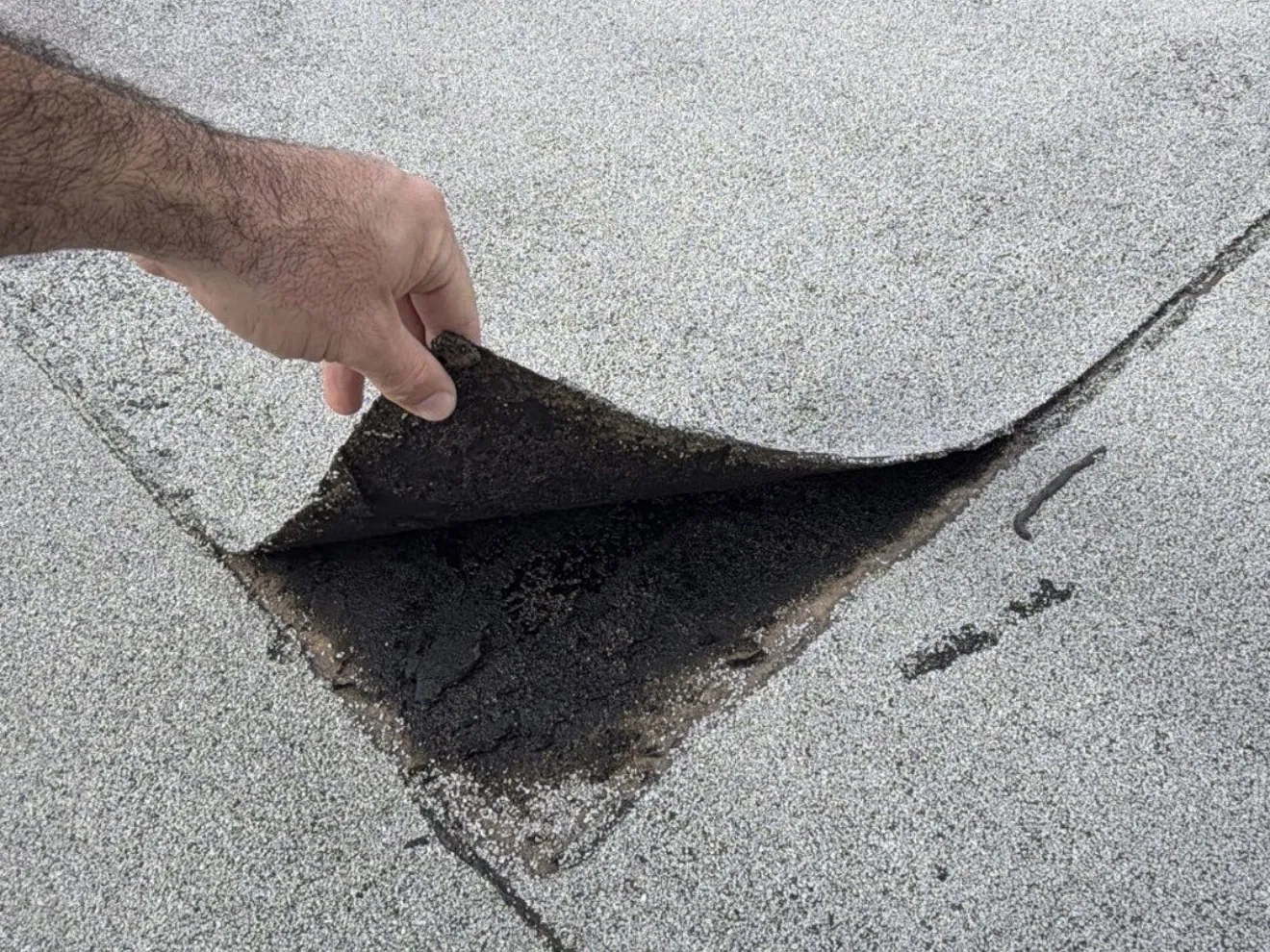
An apartment community rarely has just one roof. There are the apartment buildings themselves, a clubhouse and leasing office, maintenance shops, and on some properties covered parking or a pool building. Those roofs often went on in different years, from different contractors, in different systems.
On the low-slope and metal roofs, that can mean TPO and PVC, modified bitumen, built-up and metal panels, sometimes all on one property. Each one wears out on its own clock. Treating the property as one roof means either spending money on buildings with years left in them, or missing the one that is actually failing.
So we walk each building and look at its roof on its own terms. We can also estimate how much service life each roof has left, which is what a multi-year budget for the property needs. If you need that on paper for a purchase, a sale or a lender, that is a paid commercial roof inspection. The formal report gives a condition summary, photos of the issues and repair recommendations, and is usually sent within 48 hours.
The trouble spots on these properties tend to be where roofs meet walls and where equipment sits on the roof. On each building, that means looking closely at these:
- Walls and stair towers
- Base flashing and counterflashing where a roof meets a taller wall or a stair tower, and the joints in the parapet coping. Water that gets in here runs down inside the wall and can show up well below the roof.
- Breezeway and walkway roofs
- The low roofs over breezeways and walkways, their edge metal, and the point where each one ties into the main building.
- Equipment on the roof
- Condensing units on stands or curbs, and the lines running between them and the building: condensate, gas and the rest.
- Drains, scuppers and gutters
- Whether water can get off the roof at all: strainers in place, scuppers open, gutters and downspouts clear and still attached.
- Old repairs
- Every patch on the roof, and whether its edges have started to lift. On a property with a long leak history, the patches are a record of where water has gotten in before.
02
Budget years and ownership approval
Roof spending at an apartment property has to fit a budget year. The property manager usually has to take the number to ownership or an asset manager before anything is approved. What makes that easier is separating what has to happen now from what can wait, and putting more than one option in front of them.
A roof worn across its surface, over a sound deck and dry insulation, can often be restored for a fraction of a tear-off. The numbers are on our commercial roof restoration page.
Every price is in writing before work starts. The proposal can be split by building or by budget year, so ownership approves what is urgent now and plans the rest.
03
People live under this roof
Multifamily roof work happens over people's homes. Residents are in at all hours, parking is tight, and children, pets and patios sit right below the roof edge.
A repair is a small, local job. On bigger work, we open only as much roof as we can close the same day, and nothing is left open overnight. Over an apartment, an open roof and a Houston afternoon storm end with water in someone's living room.
Before the schedule is set, tell us where material and vehicles can go, which entrances and fire lanes have to stay clear, and where roof access is. Tell us too how much notice your residents need, so your notices go out in time with the work dates.
Roof access on apartment buildings is often a hatch in a top-floor hallway or a ladder in a stair tower. Tell us which, and whether reaching it means walking past residents' doors with tools and material. Where core samples are needed to check the insulation, each one is patched immediately, so no opening is left over anyone's home.
Where condensing units sit on the roof, their lines often run across it, and some sit on curbs too low to flash. We raise curbs, and lift gas and condensate lines onto supports, with the property's HVAC contractor.
04
Repeat leaks and blocked drains
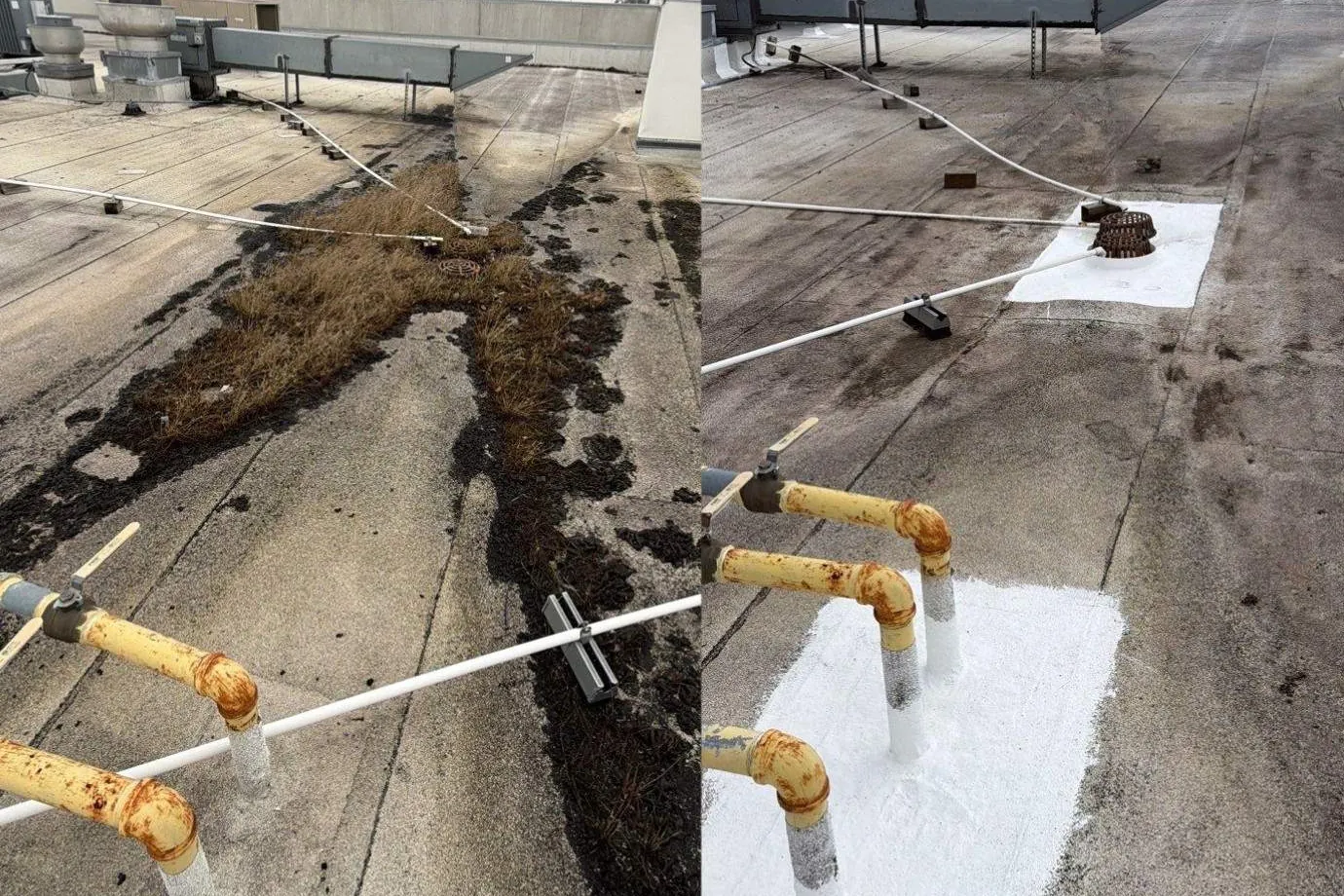
On a multifamily property, the same unit tends to report the same leak until somebody fixes the actual cause. Each time, a ceiling or a wall gets patched, the unit is harder to lease, and the resident loses patience.
Breaking that loop starts with walking the roof above and around the unit, rather than the spot over the stain, and fixing the detail that failed. That detail is often unremarkable: a wall flashing pulled away, a cracked pipe boot, a seam that has opened, or an old patch that has let go again. If water is coming in now, that is commercial roof leak repair.
Trees around apartment buildings drop leaves and needles onto the roof, and silt settles around a drain until grass takes root in it, as in the photograph. A blocked drain holds water against the seams and flashing around it. The causes and fixes for standing water are on our flat roof repair page.
Keeping drains clear on a schedule is a large part of what commercial roof maintenance does for a property like this.

Who you are dealing with
Coons Roofing is a commercial-only roofing contractor working across the Houston metro. It is owned and run by Wade Coons, who is on every project from the first roof walk to the final walkthrough. There is no salesman between you and the person who looked at your roof.
Certified applicator for Versico, FiberTite, Duro-Last, Karnak, IPC, Western Colloid, Elevate and GAF. Fully insured with general liability and workers compensation coverage.
05
Apartment and multifamily roofing FAQs
Do you work on apartment roofs with tenants in the buildings?
Yes. Repairs are local work, and residents can stay in their homes. Bigger jobs get planned around parking, roof access and how much notice your residents need, so tell us those before the work is scheduled.
Can you look at every building on the property and tell us which roofs need work first?
Yes. We walk each building and can estimate how much service life each roof has left. The assessment is free when we are quoting work. Formal inspection reports for a sale, a purchase or a lender are paid.
Do you work on the roofs over breezeways and stair towers?
Yes. The low roofs over breezeways and walkways, and the flashing where they and the stair towers meet the main building, get walked and repaired like any other roof detail. We flash the roof to the wall; brick and mortar repair on the wall itself is a mason's job.
Do you work on condo buildings?
Yes. We work with the owner directly or through the management company, whichever runs the property. Commercial and multifamily buildings only; we do not work on houses.
The same unit keeps reporting a leak. What should we do?
Find the detail that actually failed. That means walking the roof around the unit as well as over the stain, and fixing the cause instead of patching the same spot again. If water is coming in now, call 713-367-1495 for same-day emergency response, including after hours and weekends.
Do you offer roof maintenance programs for apartment communities?
Yes. Programs run on year-long contracts, with visits twice a year, or four times on roofs that need more cleaning. Each visit clears debris and gutters and inspects the flashings and drainage, repairs come as a written proposal, and you get before and after photos. Pricing is per square foot, based on access, number of stories and how busy the roof is.
Can an older apartment roof be restored instead of replaced?
It can be, if the deck is sound and the insulation is dry. A fluid-applied system goes over the existing roof with nothing torn off, so the building never has an open deck over anyone's home.
06
Where we work across the metro
We cover Harris, Fort Bend, Montgomery, Galveston, Brazoria, and Waller counties. Pick your city for local detail on what we see on roofs there.
Related services

Schedule a free roof assessment
We'll walk your roof, take photos, and give you straight answers. The assessment is free when we are quoting the work.
We reply within 24 hours, usually the same day. No pressure, no sales visit you did not ask for, and we never sell your information.