Commercial roof repair in Houston
Split seams, torn flashing, storm damage and water that sits on the roof for days. We find the detail that failed, fix it properly, and put the scope and price in writing before any work starts.
On this page
01
Commercial roof repair starts at the failed detail
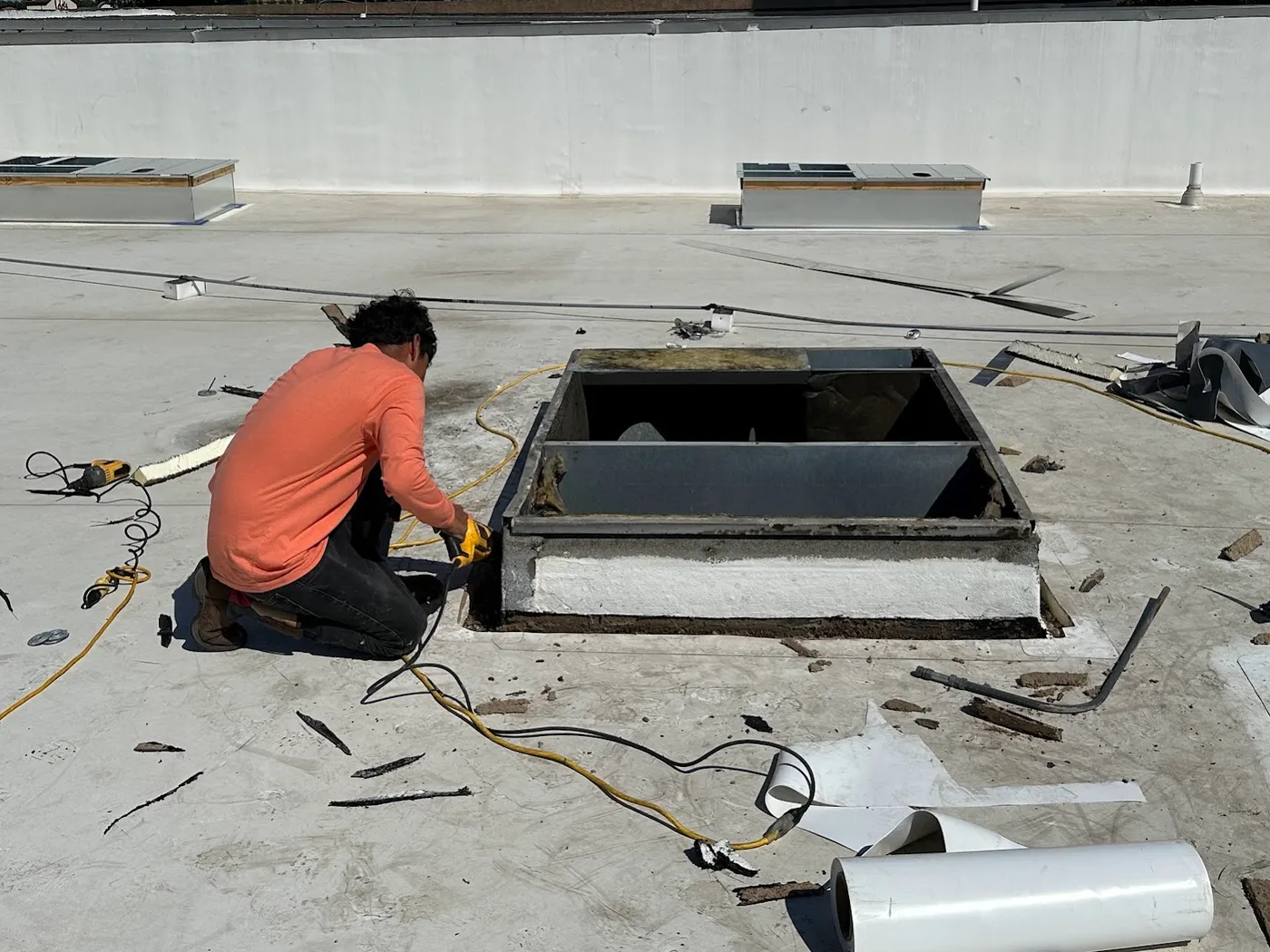
Commercial roof repair is not a new roof and it is not a coat of paint. It is finding the part of the roof that has failed, a seam, a flashing, a curb or a drain, and fixing that part properly. On most commercial roofs the field of the roof is fine. The details are not.
We repair TPO, PVC, modified bitumen, built-up and metal roofs, and roofs that have already been coated. That covers warehouses, distribution centers and industrial buildings, strip centers, offices, medical offices, churches and apartment properties across the Houston metro and Galveston County.
Whether you have found a split seam or are budgeting for the roof, it starts the same way: somebody walks the roof.
If water is coming through a ceiling right now, start with emergency roof repair instead. That is same-day emergency response, with temporary protection first and the permanent repair once the roof is dry.
02
What we repair
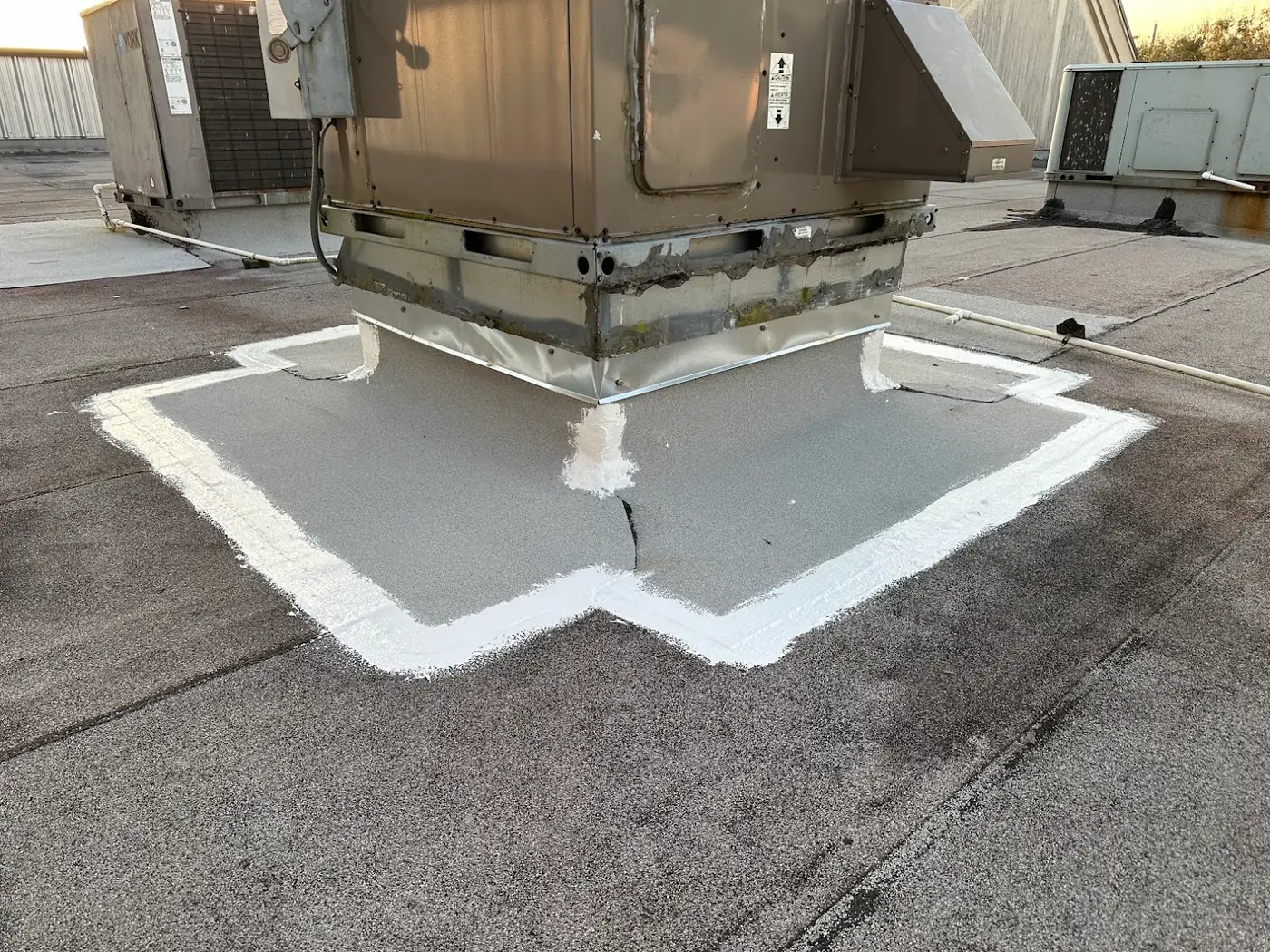
Commercial roofs rarely fail all at once. They fail where the roof is cut, joined or stopped. This is what we find, and what fixing each one involves.
- Seams
- Seams that have opened or split where two sheets were joined. On TPO and PVC the seam is cleaned back and welded again with hot air, or covered with a strip of new membrane welded on both sides. On modified bitumen and built-up roofs the lap is cut back and new material set in.
- Flashing
- Base flashing at parapet walls with its termination bar and counterflashing, and flashing where a low roof meets a higher wall. When it pulls away, water gets straight behind the membrane. We cut out what failed and build the detail back, run up the wall and closed off at the top.
- Curbs and penetrations
- HVAC curbs, exhaust fans, skylights, pipes, conduit, gas lines and pitch pockets, all walked around and serviced for years. Pipe boots crack, curb flashing opens at the corners, and pitch pockets pull away. They get reflashed with new membrane, not smeared with mastic.
- Membrane
- Punctures from dropped tools and storm debris, tears along the service paths, blisters, and surface gone brittle and cracked. A puncture in a sound roof gets a patch of the same material. Brittle membrane across a large area is a different conversation, and we will tell you so.
- Drains, scuppers and ponding
- Clogged drains, loose drain rings, blocked scuppers, and low spots that hold water for days. The drain gets cleared and reset, and where a low spot keeps holding water, we find out why first.
- Edge metal and coping
- Gravel stop, drip edge and parapet coping that wind has loosened or peeled back. Loose metal gets refastened or replaced, and the membrane under it gets checked before it goes back on.
- Old repair areas
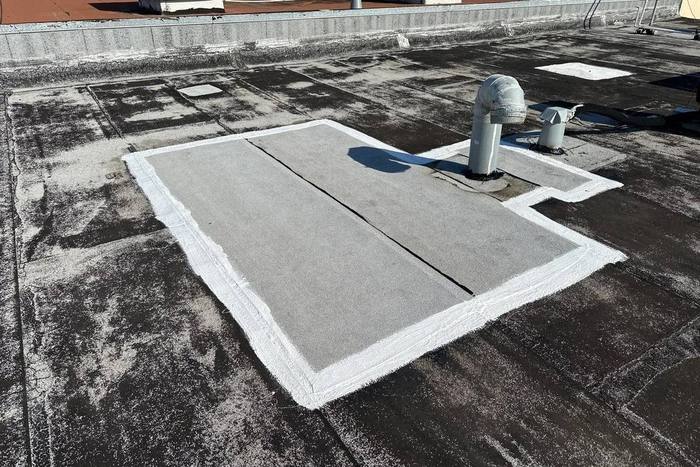
- Patches on top of patches: mastic around a drain, fabric on a parapet, tar on a curb. We open them up, find what is underneath, and fix the detail instead of adding another layer.
03
A repair, not another patch
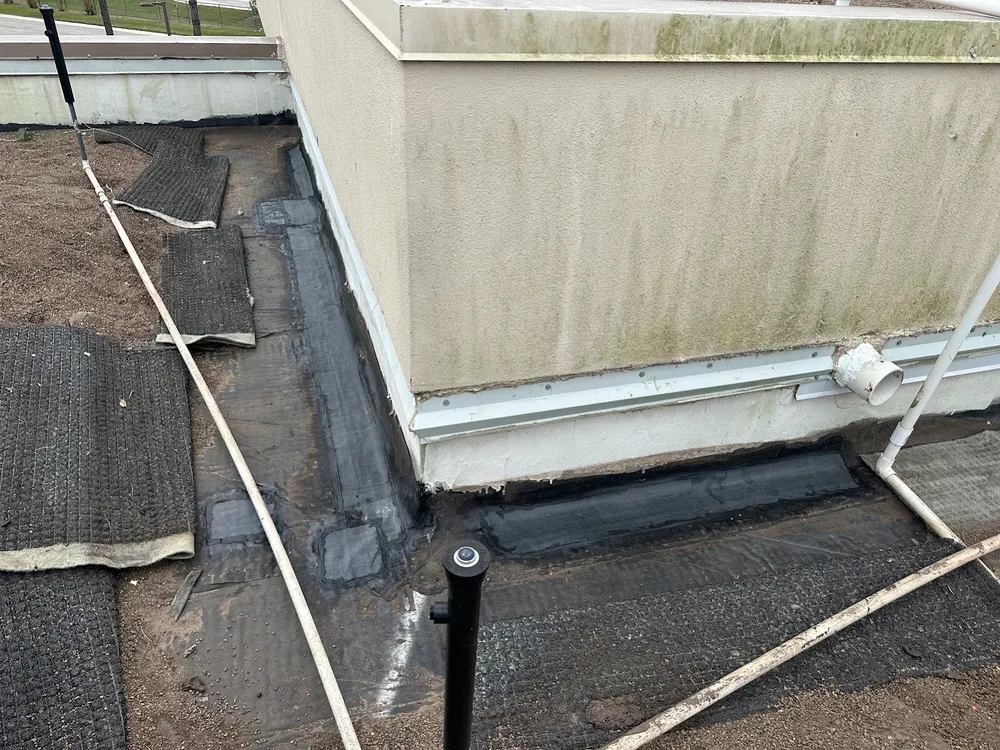
A patch goes on top of a problem. A repair takes the problem out.
Mastic and fabric over a split flashing will often stop water for a season. Then the mastic dries and cracks, the same spot opens again, and now it sits under old patch that has to be dug out. So the worst details on an older roof are often the most patched.
A repair cuts the failed material back to sound roof and builds the detail again in the same material. That means TPO welded to TPO, PVC to PVC, modified bitumen set into modified bitumen.
A temporary patch has its place, like stopping water on a Saturday night or holding a roof until it gets replaced. The problem is a patch that gets billed as a repair and left there.
04
How the repair gets done
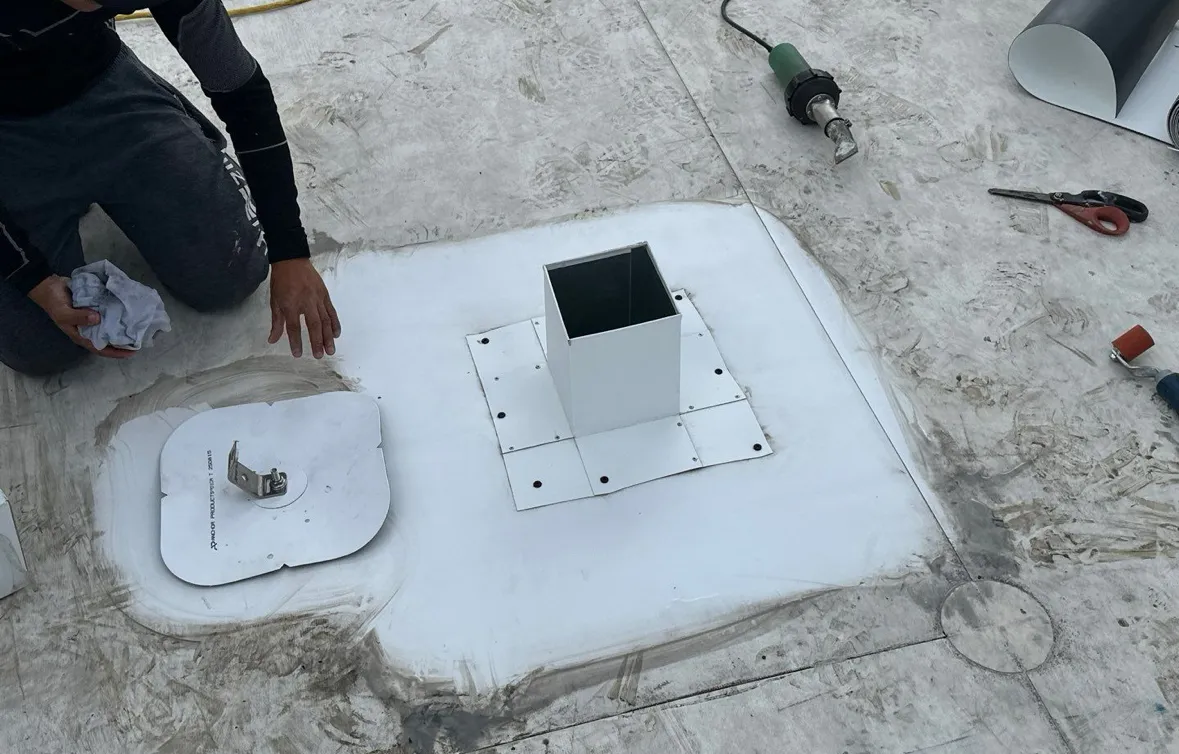
Every repair runs in the same order, whatever the roof.
- Walk the whole roof
- Including the parts nobody reported. A roof with one open seam often has others, so we pull the covers off the drains and look at every curb, wall and edge.
- Photograph it
- Every finding gets photographed, so you can see where the problems are and whether they cluster in one area.
- Scope and price in writing
- You get the photos, what we found, what we recommend and what it costs, split so the urgent items can be approved now and the rest held. No work begins until you approve the scope and the price in writing.
- Fix the detail
- Failed material cut out, new material of the same system put in, and the detail closed off properly at the wall, the curb or the edge.
- Before and after photos
- Dated photos of the detail before and after the repair, so ownership can see what was done.
Repairs happen with the building open. Tenants keep working underneath, and we do not leave a section of roof open overnight.
Want your roof walked and the scope in writing?
The assessment is free when we are quoting work. We walk all of it, photograph what we find, and send back the scope and the price split so the urgent items can be approved now and the rest held. Nothing gets done until you approve it.
05
Repairs by roof system
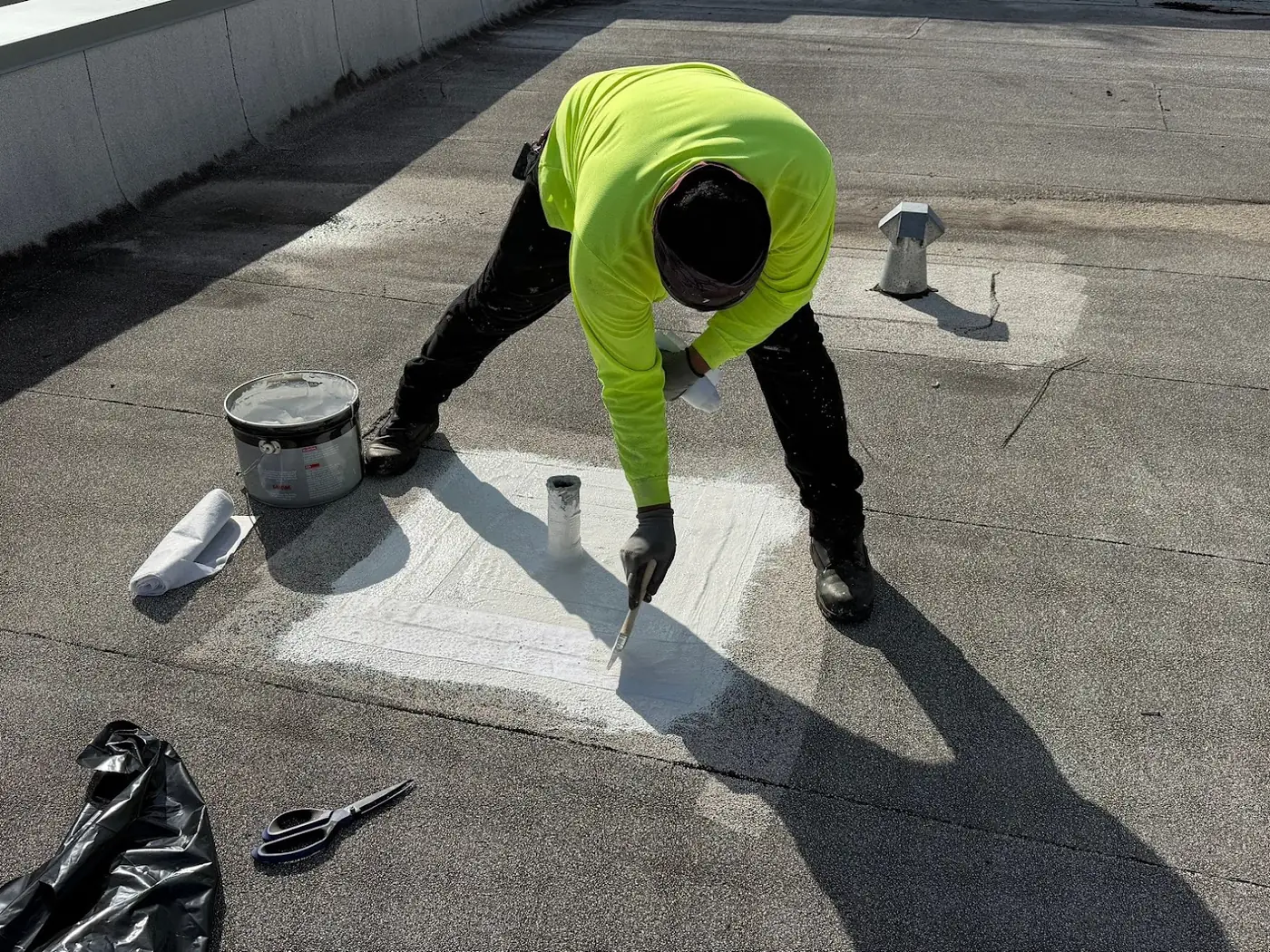
Each commercial roof system fails and gets repaired in its own way. Across all of them, the repair material has to match the roof, or it will not stay stuck to it.
- TPO and PVC
- White single-ply membrane with seams welded by hot air. Repairs are welded too: the old membrane is cleaned back to fresh material and new membrane welded over the damage. A single-ply roof gone brittle does not take a weld as cleanly, which tells you something about its remaining life. The system itself is on our TPO roofing page.
- Modified bitumen
- Asphalt-based rolls, usually with a granulated cap sheet. The trouble spots are base flashing at walls and curbs, blisters, and cracking where the granules have worn off. The failed area is cut out and new material set in, lapped onto sound roof on every side.
- Built-up and gravel
- Layers of felt and asphalt, often under gravel. The gravel is scraped back to see the damage and goes back down afterward. Years of patching usually sit around the drains and walls, and that is where we start.
- Metal
- R-panel roofs fail at the exposed fasteners and the laps between panels. Standing seam roofs fail at the seams, panel ends, ridge and curbs. Repairs mean new fasteners, resealed laps, and section repairs where a panel has rusted through. When surface rust covers the whole roof but the panels are solid, the answer is metal roof coating and restoration, not more repairs.
- Coated roofs
- A coated roof needs a compatible repair material. Once a roof has been coated in silicone, about the only thing that will stick to it is more silicone, so we find out what is on the roof first.
06
Storm, hail and wind damage
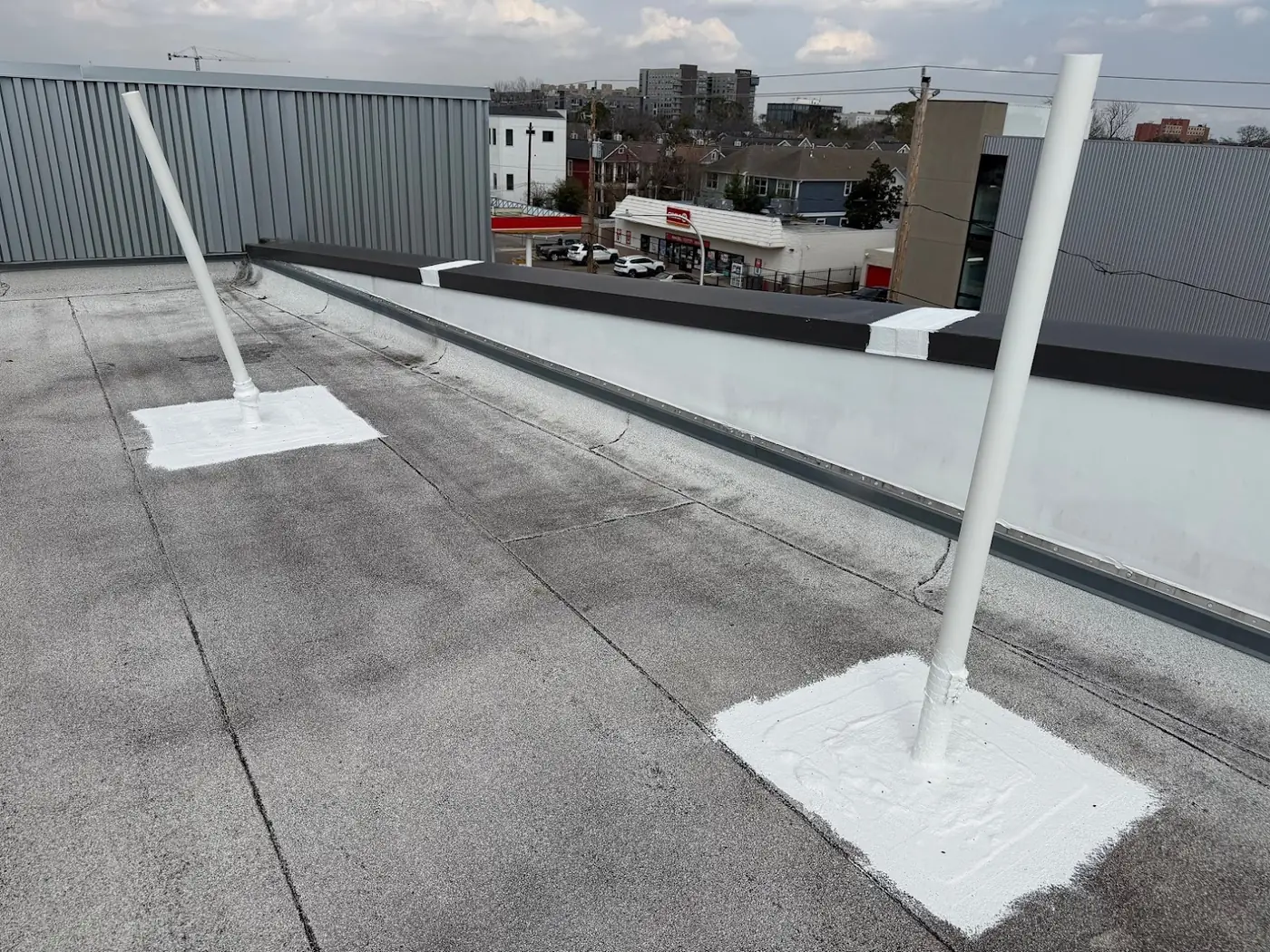
Gulf Coast storms damage commercial roofs in a few predictable ways. Wind gets under the edge metal and coping and peels it back, then lifts the membrane at the corners and perimeter. Loose panels, signs and branches puncture the roof. Hail bruises the membrane, dents metal panels, and can crush the board underneath with little to see from the top.
A lot of that damage does not show up for weeks. A hail bruise opens slowly, and a lifted corner holds until the next storm finds it. The fixes are the ones above: edge metal refastened or replaced, punctures patched in the same material, failed membrane cut out and replaced. If nothing is leaking and you want the whole roof checked, that is a commercial roof inspection.
In Harris County east of Highway 146, and in Galveston and Brazoria counties, roof repairs as well as re-roofs can need Texas windstorm certification (WPI-8) to keep TWIA wind coverage. We do WPI-8 certified work. Ask about it before the repair is scheduled, not after.
If the storm has left water coming into the building, that is an emergency call first. The permanent repair follows once the roof is dry.
Storm or hail damage to fix?
Tell us the building and what the storm did: edge metal or coping loose, a puncture, split membrane. Every repair is scoped and priced in writing before work starts.
07
Ponding water and drains
Water still standing on a low-slope roof two days after the rain has stopped adds weight, wears out the membrane under it, and finds any seam that is slightly open. It means the water is not getting to the drain.
Usually the cause is simple: a drain choked with leaves, a missing strainer, a loose drain ring, or a scupper blocked by debris or an old patch. Those get cleared, reset and resealed. Insulation crushed along the service paths gets rebuilt.
A sagged deck or a moved joist is a structural problem. We document it and quote the structural repair separately, or work around it where the damage allows. The causes of drainage problems are covered on our flat roof repair page.
08
Repair or replace: how we decide
Most roofs we look at do not need replacing yet. The question is whether the damage is in a few places or everywhere, and whether what sits under the membrane is still dry.
Repair makes sense when the failures are at the details and the rest of the roof is sound: membrane still flexible, insulation dry, deck solid.
It stops making sense when the membrane is splitting across the field, the insulation is wet across large sections, or the deck has gone soft or rusted through. A repair on top of wet insulation seals the water in. The same goes for a roof whose repair bills are adding up to a real share of a new roof.
Between the two, a commercial roof restoration puts a fluid-applied membrane over a roof that is worn all over but sound underneath, with no tear-off. When the numbers do point at a new roof, commercial roof replacement is the next conversation.
Telling those apart takes a walk on the roof and, where needed, a core cut to see whether the insulation is wet. Once a roof has been repaired, keeping it that way is what commercial roof maintenance is for.
Wade's answer, when an owner asks whether to repair or replace: “I wouldn’t start with replacement. First we need to find out where the water is getting in, what shape the roof is actually in, and whether the leaks are isolated or the whole system is failing. If the roof can be repaired and bought more time, I’ll tell you that. If replacement is the smart move, I’ll show you why and give you the numbers.”
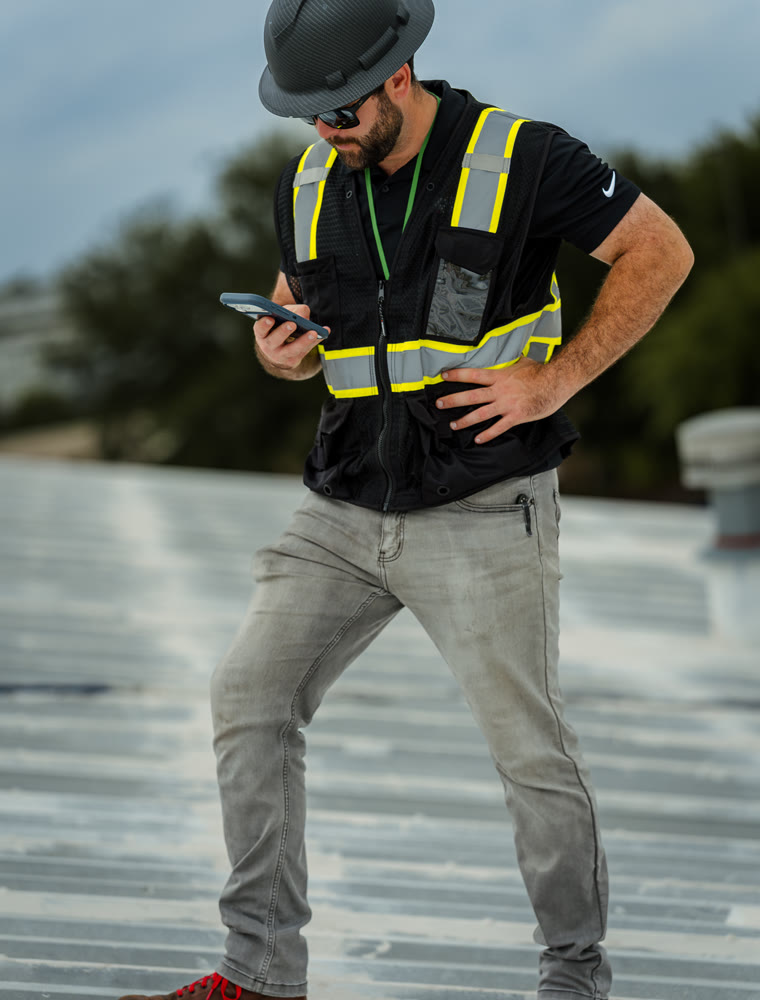
Who you are dealing with
Coons Roofing is a commercial-only roofing contractor working across the Houston metro. It is owned and run by Wade Coons, who is on every project from the first roof walk to the final walkthrough. There is no salesman between you and the person who looked at your roof.
Certified applicator for Versico, FiberTite, Duro-Last, Karnak, IPC, Western Colloid, Elevate and GAF. Fully insured with general liability and workers compensation coverage.
09
Commercial roof repair FAQs
How much does commercial roof repair cost in Houston?
A standard commercial roof repair in Houston generally runs $1,500 to $3,500. Every roof still gets priced off the roof, because the same split seam can be a small job or a large one. What moves the number is how much is damaged, which system it is, and how many curbs, walls and drains are involved. Access and any wet insulation that has to come out move it too. You get the price in writing, with photos of what it covers, before any work starts.
Should I repair my commercial roof or replace it?
Repair when the damage is at the seams, flashing, curbs or drains and the rest of the roof is sound. Replace when the membrane is failing across the whole roof, large areas of insulation are wet, or the deck is soft or rusted through. Restoration is the middle option for a roof worn all over but sound underneath. A walk on the roof, and sometimes a core cut, tells you which one you have.
Will a repair void my roof's manufacturer warranty?
It can, if the wrong material goes on or the work does not follow the manufacturer's rules. Most manufacturer warranties have terms about who can work on the roof and what they can use. If your roof is still under warranty, check its terms before anyone cuts into it.
How quickly can you get someone out to look at the roof?
If water is coming into the building, that is an emergency call rather than a form. For everything else, we answer within 24 hours, usually the same day, and set a time to walk the roof.
Can the building stay open during a roof repair?
Yes. A repair is local work on part of the roof, so tenants keep working underneath it. We plan around the building: noisy work kept away from occupied suites where we can, access agreed with your maintenance team, and no section of roof left open overnight. If the repair sits over a sensitive space, like a server room or a procedure room, tell us and we plan for it.
Will you repair a roof another contractor installed?
Yes. Who installed the roof does not change how it gets repaired. The repair depends on what is on the roof now, what shape it is in, and whether a manufacturer's warranty is still in force. We check that before anything gets cut.
What areas do you cover for commercial roof repair?
The Houston metro and Galveston County. That includes Katy, Sugar Land, Stafford, The Woodlands, Spring, Cypress, Tomball, Conroe, Pearland, League City and Pasadena, along with the Ship Channel and refinery corridor east of Houston. In Galveston County, Brazoria County and east of Highway 146, ask about WPI-8 windstorm certification before a repair is scheduled.

Not sure yet whether yours is a repair?
Tell us the building and what you have found on the roof. We walk all of it, photograph what failed, and put the scope and the price in writing. If it is past repairing, we will tell you that instead.
10
Where we work across the metro
We cover Harris, Fort Bend, Montgomery, Galveston, Brazoria, and Waller counties. Pick your city for local detail on what we see on roofs there.
Related services

Schedule a free roof assessment
We'll walk your roof, take photos, and give you straight answers. The assessment is free when we are quoting the work.
We reply within 24 hours, usually the same day. No pressure, no sales visit you did not ask for, and we never sell your information.