Medical office & clinic roofing in Houston
In a clinic or medical office building, the roof is the cheap part of a roof failure. We repair, maintain and replace medical office roofs around patient schedules, and we never leave a section of roof open overnight.
On this page
01
The building cannot get wet
Water over an exam or procedure room takes that room out of use. Water near imaging or lab equipment puts expensive equipment at risk. A stained ceiling in a clinical space stays the practice's problem long after the roof is fixed.
That shapes how roof work on these buildings is planned. A repair is local work on one part of the roof. On a replacement, we open only as much roof as we can close again the same day, and nothing is left open overnight. Before anything is cut, tell us which rooms sit under the work area and what is in them. If a leak does show up while work is underway, temporary protection goes down first: patches, tarps or sheeting, whatever the situation needs.
Some medical buildings have their own written rules for contractors working on the building. If yours does, send them to us before the work is scoped.
On medical office buildings and clinics we work on TPO and PVC, modified bitumen, built-up and metal roofs. If water is coming into a suite now, that is commercial roof leak repair, and it is a phone call rather than a form.
02
Crowded roofs: units, fans and pipes
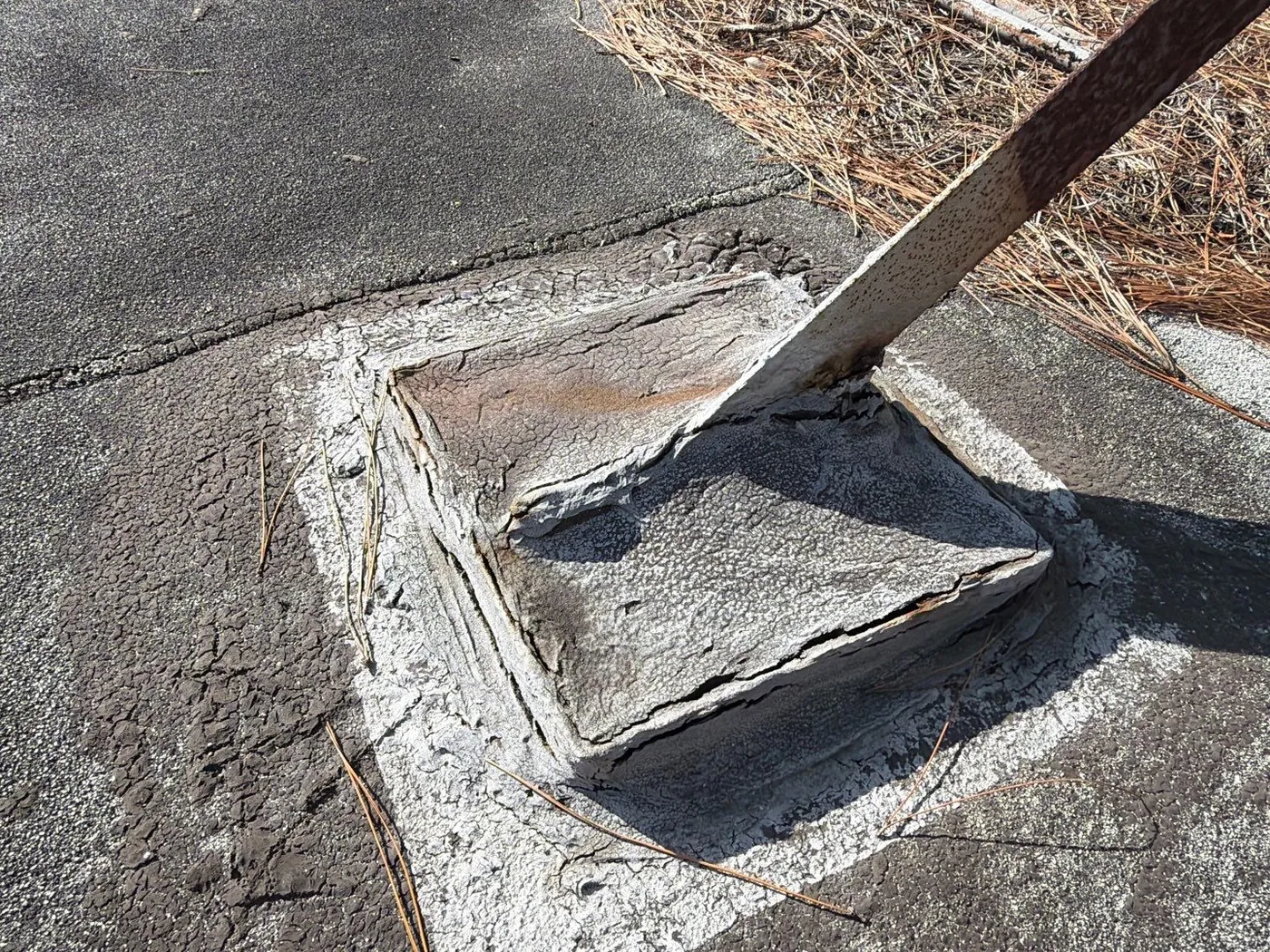
Medical buildings tend to have a crowded roof: separate units for separate suites, exhaust fans, vents, and the pipes, conduit and condensate lines that serve them. Every one of those comes through the roof or sits on it, and those are the places a low-slope roof fails first.
- Rooftop units
- Curb flashing opened at the corners, curbs too short to flash properly, and new units set on an old curb without the flashing being redone.
- Exhaust fans and vents
- Flashing pulled back from the base, and housings and hoods dented by service work or storms.
- Pipes and pitch pans
- Pipe boots split, and pitch pans gone hard and cracked around the pipe or support they are meant to seal, as in the photograph.
- Condensate and gas lines
- Condensate emptying onto the roof and keeping one spot permanently wet, and lines lying on the membrane instead of on supports, wearing through it.
- Abandoned openings
- Curbs and pipes left behind by equipment or practices that are gone, sealed over rather than taken out.
A new practice's build-out often cuts new openings in the roof, so have them checked once it is finished.
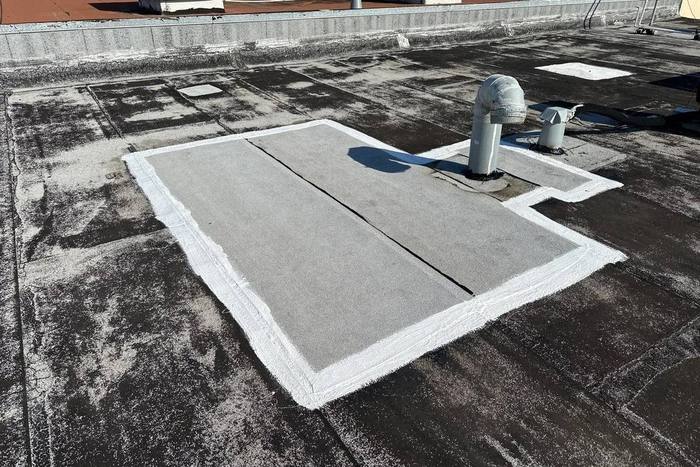
The fixes are ordinary roof work: flashing rebuilt in the same material as the roof, pitch pans refilled or replaced, abandoned openings cut out and patched. We raise curbs, and lift gas and condensate lines onto supports, with the building's HVAC contractor. A standard commercial roof repair generally runs $1,500 to $3,500.
03
Odor, noise and patient schedules
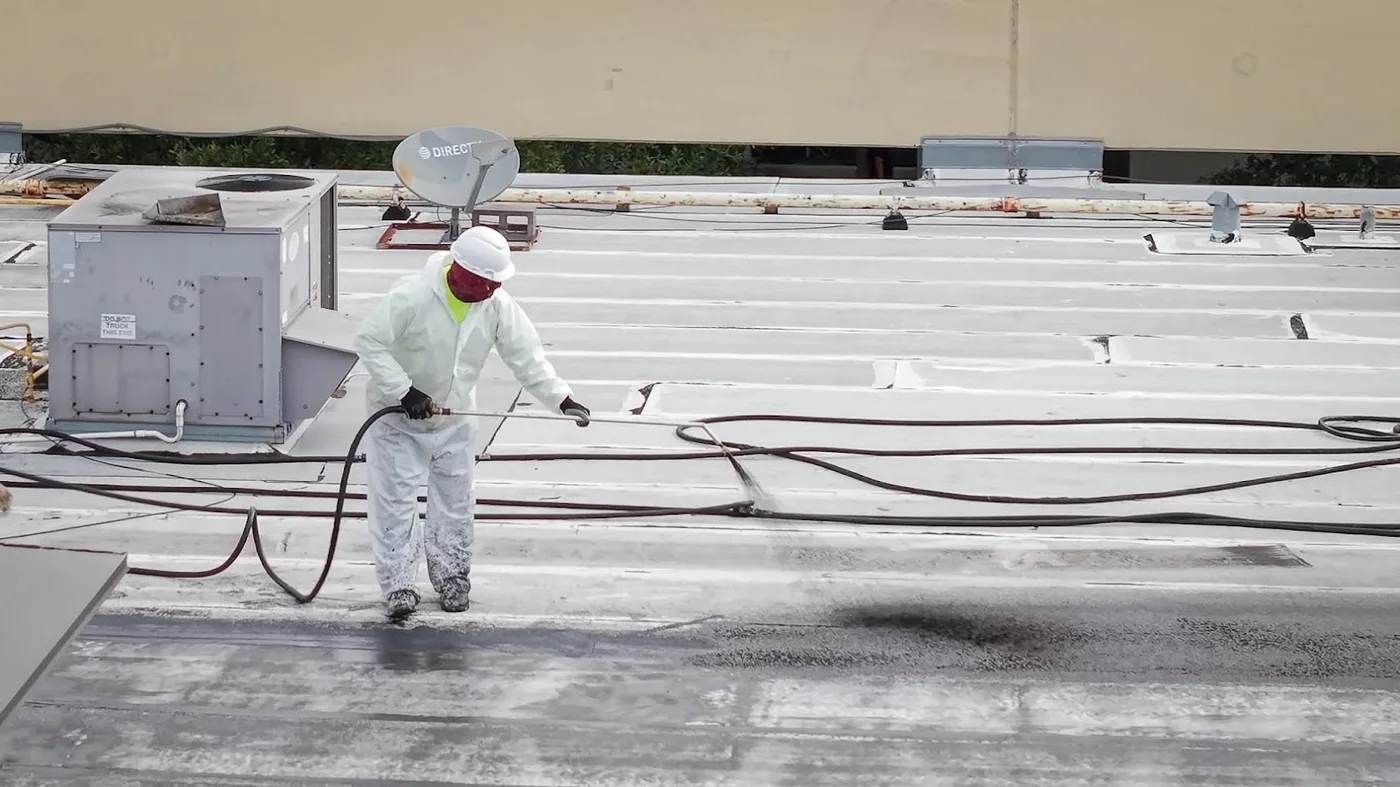
Roof work over occupied clinical space has constraints most commercial work does not. Rooftop units pull outside air into exam rooms and waiting areas, so a smell from roofing work near an intake ends up inside. Fastening and cutting noise carries through a deck into rooms where a clinician is talking to a patient.
So the first questions are about the building, not the roof. Which rooms are in use when. Which days carry procedures. Whether a suite can close for a day. The loudest work gets planned around those answers. Rooftop units and air intakes near the work are the building owner's to shut down or cover, so have that arranged, and tell us where they are, before work starts.
System choice is part of the answer too. The insulation under a new roof can be screwed down or adhered. To limit disruption, we adhere it with a low-rise foam adhesive, where the deck and the roof's wind design allow. It has no odor and keeps fasteners for the insulation out of the deck. A mechanically fastened membrane still puts fasteners through the deck, so on a new roof over the old one, where noise is a concern, we fully adhere the membrane too. The bonding adhesive that glues the membrane itself down is a different product, and some do smell while they cure. That is one more reason the units and intakes near the work need a plan before work starts. More on the membrane is on our TPO roofing page, and on the replacement itself on our commercial roof replacement page.
A new roof is not always the answer. A roof worn across its surface, over a sound deck and dry insulation, can be restored instead. A fluid-applied system goes over the existing roof with nothing torn off, so a clinic has no open deck over the exam rooms at all. Membrane restoration runs $4.50 to $8.00 a square foot against $15 to $20 to tear off and replace, and on TPO and PVC the coating starts with a primer. Whether a roof qualifies gets checked with core samples, usually two to four small cuts, each patched immediately. More is on our commercial roof restoration page.
04
Owners, practices and the photo record
A medical office building usually has more than one party with a stake in the roof. There is the owner, the property manager, and one or more practices with their own equipment and patients. Each of them wants to know what was found and what is being done about it.
Photographs answer a lot of that. When we walk a roof, we photograph what we find. When we inspect one formally, the report carries a condition summary, photos of the issues and repair recommendations, and it is usually sent within 48 hours. That is a commercial roof inspection.
For an owner planning ahead, we can also estimate how much service life the roof has left. With the photos, that gives next year's budget for the building something real to work from.
If you manage several medical buildings, each roof gets walked and photographed the same way. Wade is directly involved on every job, so there is one person to ask about all of them.
Between projects, a commercial roof maintenance program keeps drains and gutters clear and the flashings inspected. Visits run twice a year, or four times on roofs that need more cleaning, with before and after photos from every visit.
Who you are dealing with
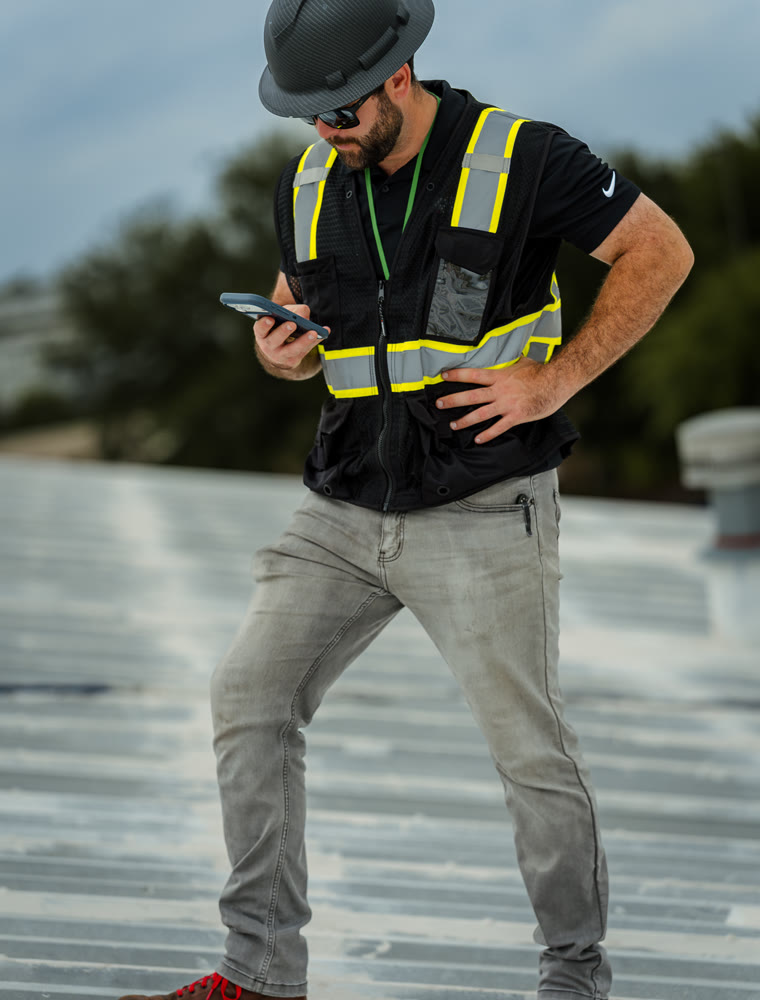
Coons Roofing is a commercial-only roofing contractor working across the Houston metro. It is owned and run by Wade Coons, who is on every project from the first roof walk to the final walkthrough. There is no salesman between you and the person who looked at your roof.
Certified applicator for Versico, FiberTite, Duro-Last, Karnak, IPC, Western Colloid, Elevate and GAF. Fully insured with general liability and workers compensation coverage.
05
Medical office roofing FAQs
Can the clinic stay open during roof work?
In most cases, yes. A repair is local work on part of the roof, and bigger work gets planned around the rooms below and the practice's schedule. Tell us which rooms sit under the work and which days carry procedures before anything is scheduled.
Our building has its own rules for contractors. Should we send them?
Yes, before the work is scoped, so they are on the table from the start rather than after the schedule is set.
Where do roofs on medical buildings usually fail?
At the openings: curbs, pitch pans, vents, pipes and the supports under equipment. Condensate lines emptying onto the roof and gas lines lying on the membrane cause trouble too, and so do old curbs left behind when equipment was changed.
Can a new roof go on quietly over an occupied medical building?
Quieter, yes. Adhering the insulation with a low-rise foam adhesive keeps fasteners out of the deck. On a new roof going over the old one, we generally fully adhere the membrane as well. Tear-off itself is not quiet, so the loudest work gets planned around the rooms below.
Can you tell us how much life our medical office roof has left?
Yes. We estimate remaining service life as part of looking at the roof. The assessment is free when we are quoting work; consulting and formal reports, including those for a sale, a purchase or a lender, are paid.
A new practice is moving into a suite. Should the roof be checked?
Yes. Build-outs are when new openings get cut through the roof, and old curbs can get sealed over and left. A walk after the work shows what changed on the roof and whether it was flashed properly.
What if water is coming in over an exam room?
Call 713-367-1495. Active water intrusion gets same-day emergency response, including after hours and weekends.
06
Where we work across the metro
We cover Harris, Fort Bend, Montgomery, Galveston, Brazoria, and Waller counties. Pick your city for local detail on what we see on roofs there.
Related services

Schedule a free roof assessment
We'll walk your roof, take photos, and give you straight answers. The assessment is free when we are quoting the work.
We reply within 24 hours, usually the same day. No pressure, no sales visit you did not ask for, and we never sell your information.