Commercial roof replacement in Houston
Commercial roof replacement in Houston, TX. Tear-off or recover, TPO, PVC or metal, with drainage fixed. See repair, restore and replace priced side by side.
On this page
01
What commercial roof replacement includes
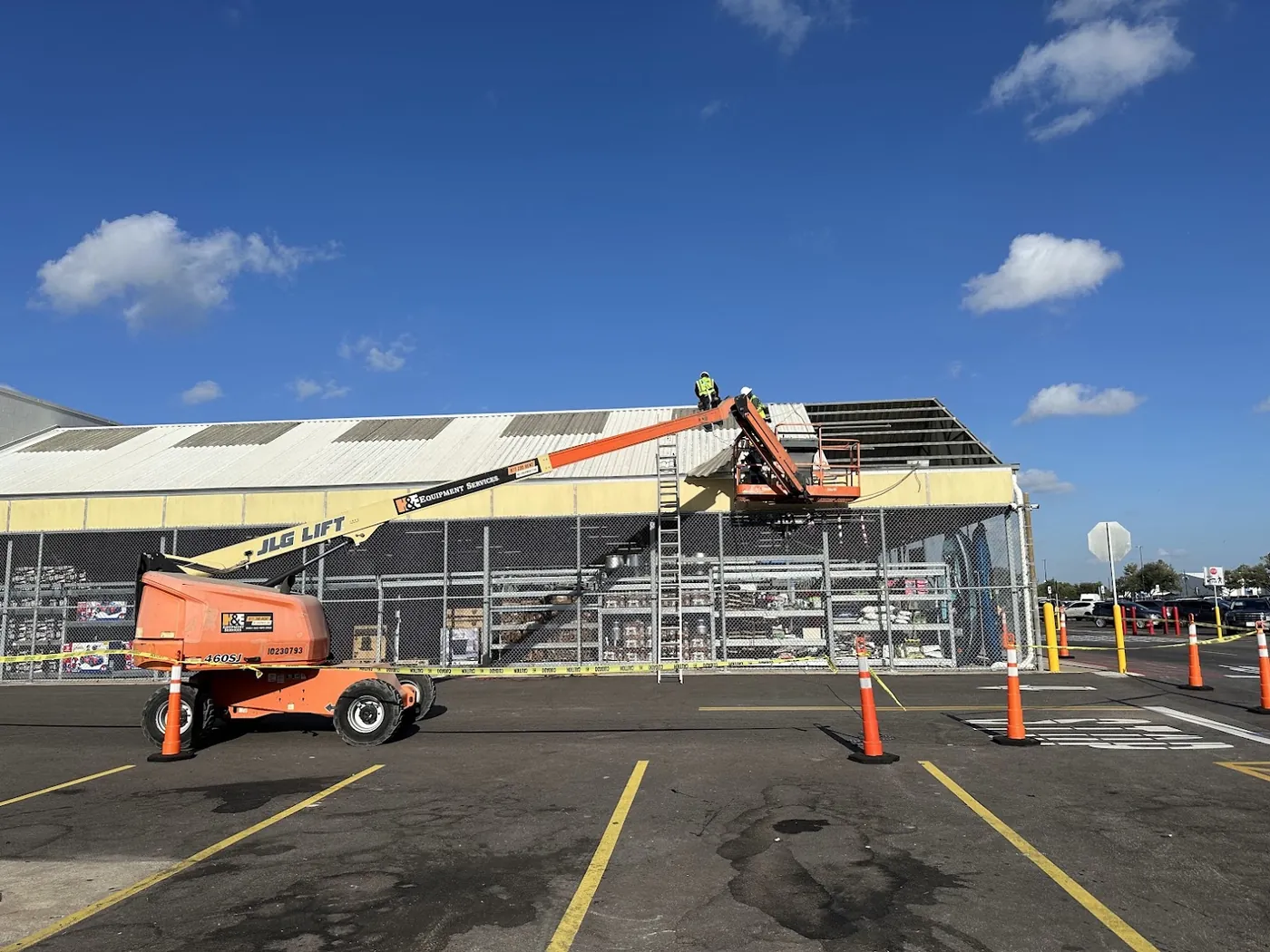
Commercial roof replacement means a new roof system. The old roof comes off down to the deck, or gets covered where it is still a sound base. Done properly, it is also the chance to fix what the old roof got wrong, starting with where the water goes.
We replace TPO and PVC single-ply, modified bitumen, built-up, standing seam and R-panel metal roofs, and build single-ply retrofits over existing metal. That covers warehouses and distribution centers, industrial buildings along the Ship Channel, strip centers and big-box retail. It also covers offices in the Energy Corridor, medical office buildings, churches and apartment properties across Houston, TX, the metro and Galveston County.
If water is coming through a ceiling right now, start with emergency roof repair. That is same-day emergency response, and the replacement decision can wait until the building is dry.
02
Check first: is the roof really done?
Before anyone prices a new roof, somebody should prove the old one is finished. Plenty of roofs called done have a few open seams, some failed flashing and wet insulation around one drain.
So we walk the whole roof, then take core cuts where they tell us something. A core cut is a small plug taken down to the deck that shows how many roofs are up there and whether the insulation is wet.
- Repair wins
- The damage is at the seams, flashing, curbs, drains and edge metal, on a flexible membrane over dry insulation. Commercial roof repair fixes the details and the roof keeps working.
- Restoration wins
- The surface is worn everywhere, over a sound deck and dry insulation. A commercial roof restoration goes over the existing roof with no tear-off. On metal with surface rust but no rust-through, that is metal roof coating.
- Replacement wins
- Insulation is wet across large sections, the deck has gone soft or rusted through, or the membrane is splitting across the field. Or the building already has too many roofs on it to take another.
A commercial roof inspection gives you a dated record of where yours stands. Owners ask Wade whether it is time for a new roof. His answer: “If replacement is the smart move, I’ll show you why and give you the numbers.”
03
Tear-off or recover
Once a roof is done, the next decision is whether it comes off. A tear-off takes everything down to the deck. A recover builds the new roof over the existing one, usually with a layer of board between.
A recover usually costs less and disturbs the building less, but it needs a sound base. Building codes generally do not allow one over a water-soaked or badly deteriorated roof, or where the building already has two or more roofs. The core cut shows both.
Wet insulation left under a new roof traps the water, where it rots wood decks and rusts steel ones. Small wet areas can be cut out as part of a recover; where the wet is everywhere, the roof comes off.
A recover also adds weight, and whether an older structure can carry it is a question for a structural engineer. A deck that has already sagged we document, then quote the structural repair or work around it, depending on how bad it is.
Not sure whether yours can be recovered?
It comes down to what is under the membrane. We walk the roof and take core cuts where they tell us the most. Photos then show you whether it is a recover or a tear-off before anyone prices either one.
04
Choosing the system and its warranty
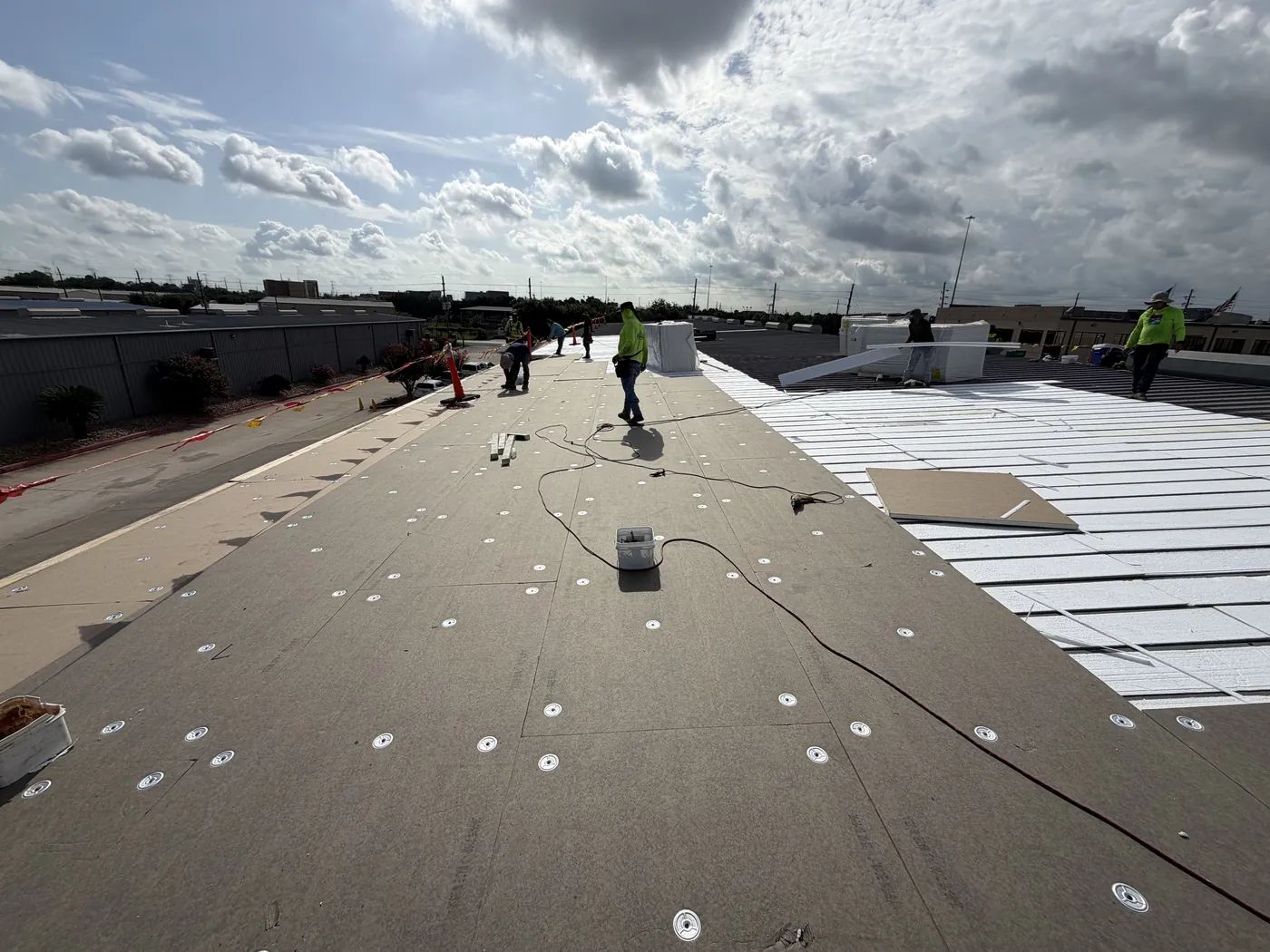
The roof picks the system before the price sheet does: slope, drainage, what sits on the roof and what happens under it.
- TPO
- A white single-ply membrane with hot-air-welded seams, common on low-slope warehouses, distribution centers, strip centers and offices. More on our TPO roofing page.
- PVC
- Also a white, heat-welded single-ply, and the better pick where grease or chemicals land on the roof, like restaurant exhaust fans. It generally costs more than TPO. The two are incompatible, so grease-worn TPO is a re-roof, not a PVC patch.
- Modified bitumen
- Asphalt-based rolls, usually with a granulated cap sheet, tough under foot traffic. Some goes down with a torch, some cold or self-adhered, which affects smell and open flame on an occupied building.
- Built-up
- Layers of felt and hot asphalt, often under gravel, and still on many older Houston buildings. The new roof does not have to be built-up again.
- Standing seam metal
- Metal panels joined at raised seams with hidden fasteners, on low-slope and moderate-slope metal buildings.
- R-panel metal
- Ribbed metal panels fastened through the face, common on warehouses and industrial buildings. A new R-panel roof is only as good as its fastening and its laps.
- Single-ply over existing metal
- A TPO or PVC membrane over insulation and board fastened to the framing, with the old metal panels left in place. TPO runs $6.50 to $8.00 per square foot and PVC $9 to $12.
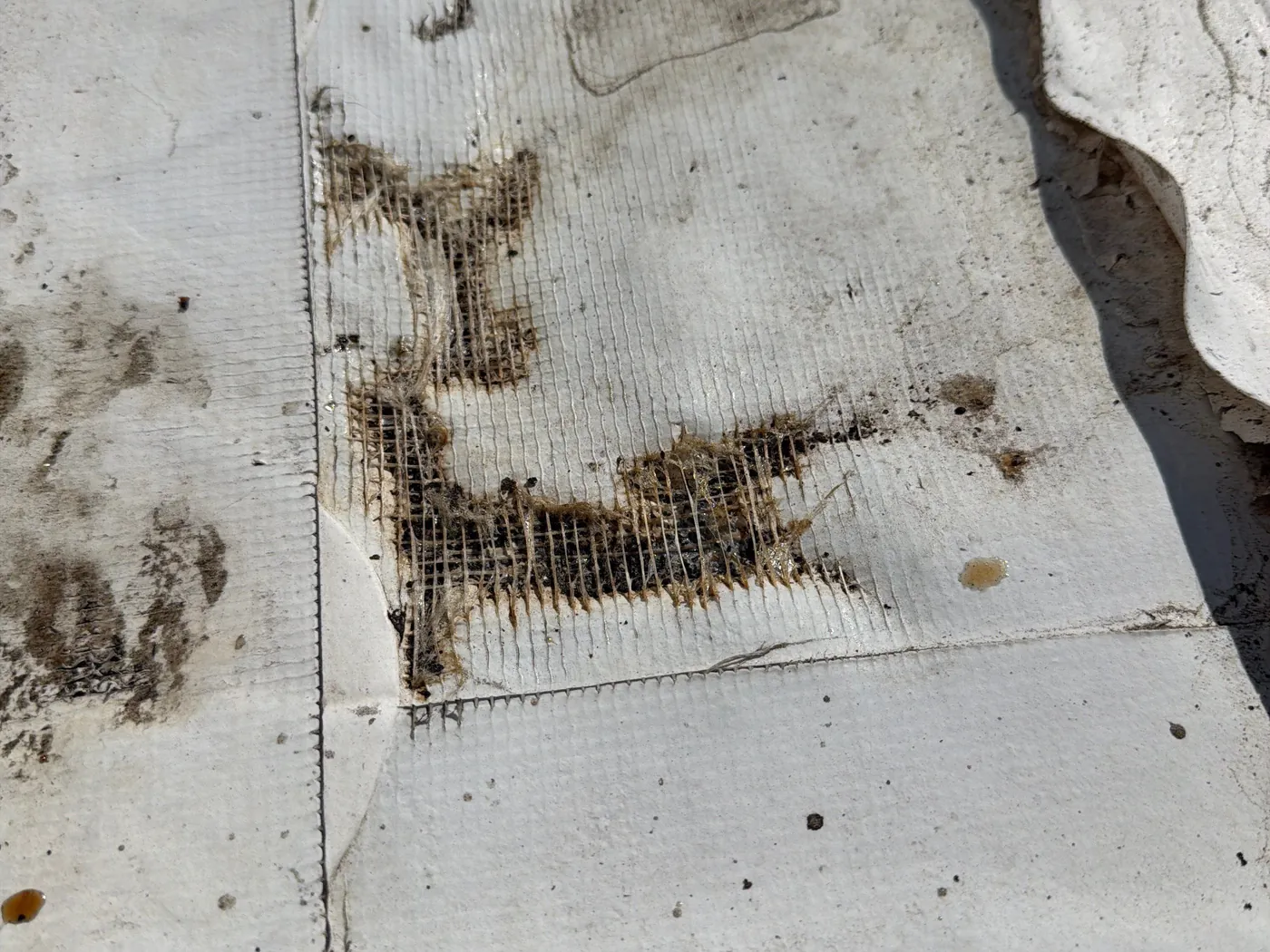
When a metal roof is past repairing but the panels and framing are still sound, we generally prefer a metal retrofit to new panels. Where the rust has not gone through, a restoration belongs in the same comparison.
We are certified applicators for Versico, FiberTite, Duro-Last, GAF and Elevate membrane systems. Manufacturers generally issue system warranties only on roofs installed by contractors they have approved. Some warranties cover only the membrane material; others cover the system, commonly including labor. Get whose warranty it is, the term and the exclusions in writing, and read what it says about wind and hail.
Warranties commonly carry upkeep conditions too, and a dated record of that upkeep is what commercial roof maintenance gives you.
05
What goes under the membrane
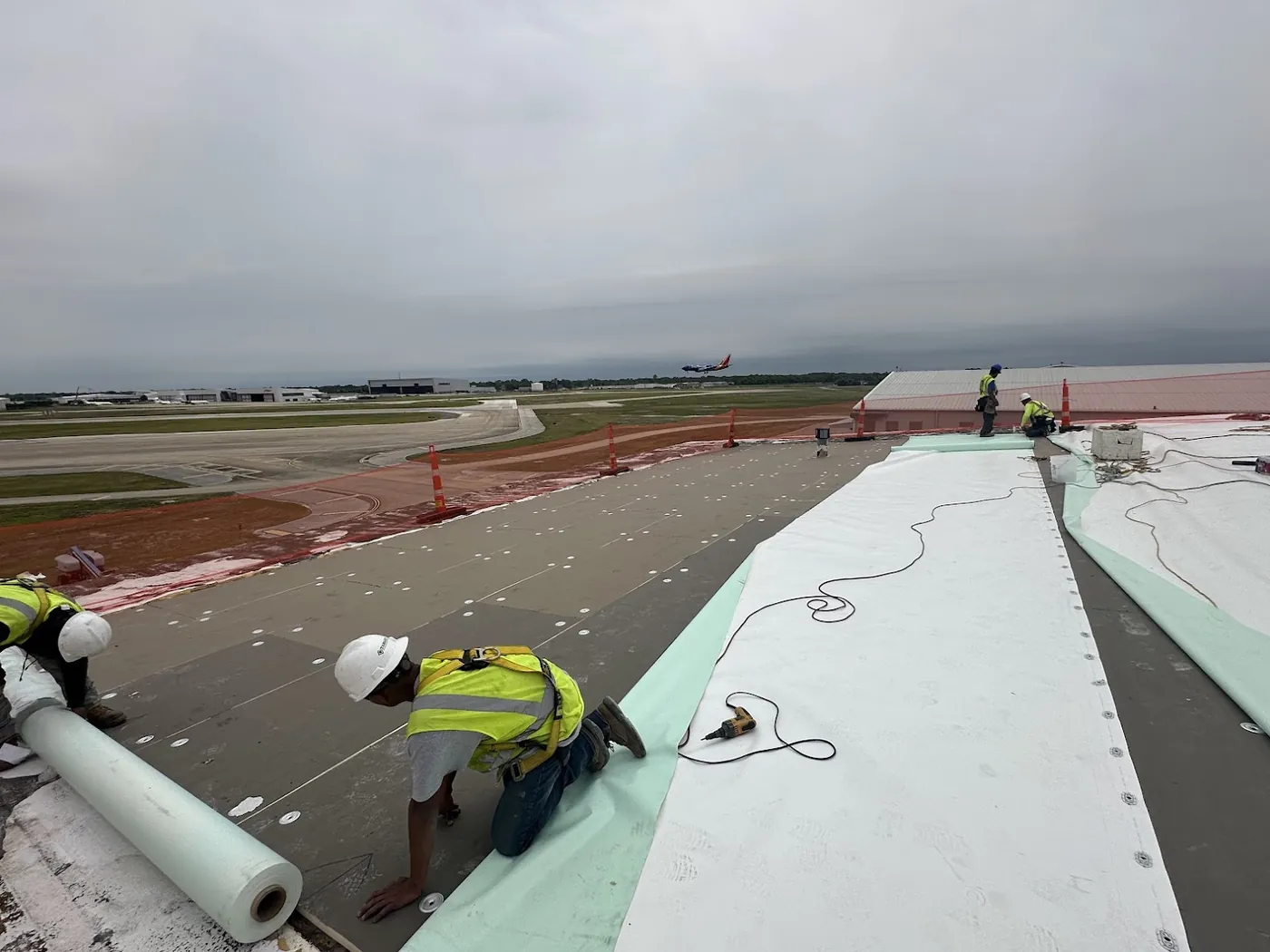
Every bid names the membrane. The layers under it decide whether the roof drains and how it holds up.
- The deck
- Steel, wood or concrete, unseen until the old roof is off. Rusted steel and rotted wood get cut out and replaced in sections, so a good proposal sets a unit price for it up front.
- The insulation
- Rigid boards, usually in staggered layers. Any board found wet gets thrown away, not reused.
- The cover board
- Where the assembly calls for one, a thin, hard board under the membrane that protects the insulation from foot traffic, dropped tools and hail.
- Tapered insulation and crickets
- The best chance to fix drainage. Tapered board has the slope cut into it, and crickets turn water around curbs toward the drains. We lay it out for this roof through the manufacturer’s design service.
- Drains, scuppers and edges
- Drains get reset into the new roof, and extra scuppers or overflows get planned in, not discovered halfway through. A new interior drain is work for your plumber. Edge metal and coping go on new, fastened for wind.
- Curbs and units
- When the new roof is thicker than the old one, curbs and rooftop units can need raising, which puts your HVAC contractor on the schedule.
On a roof that is staying, standing water and blocked drains are flat roof repair instead.
06
Replacing a roof on an occupied building
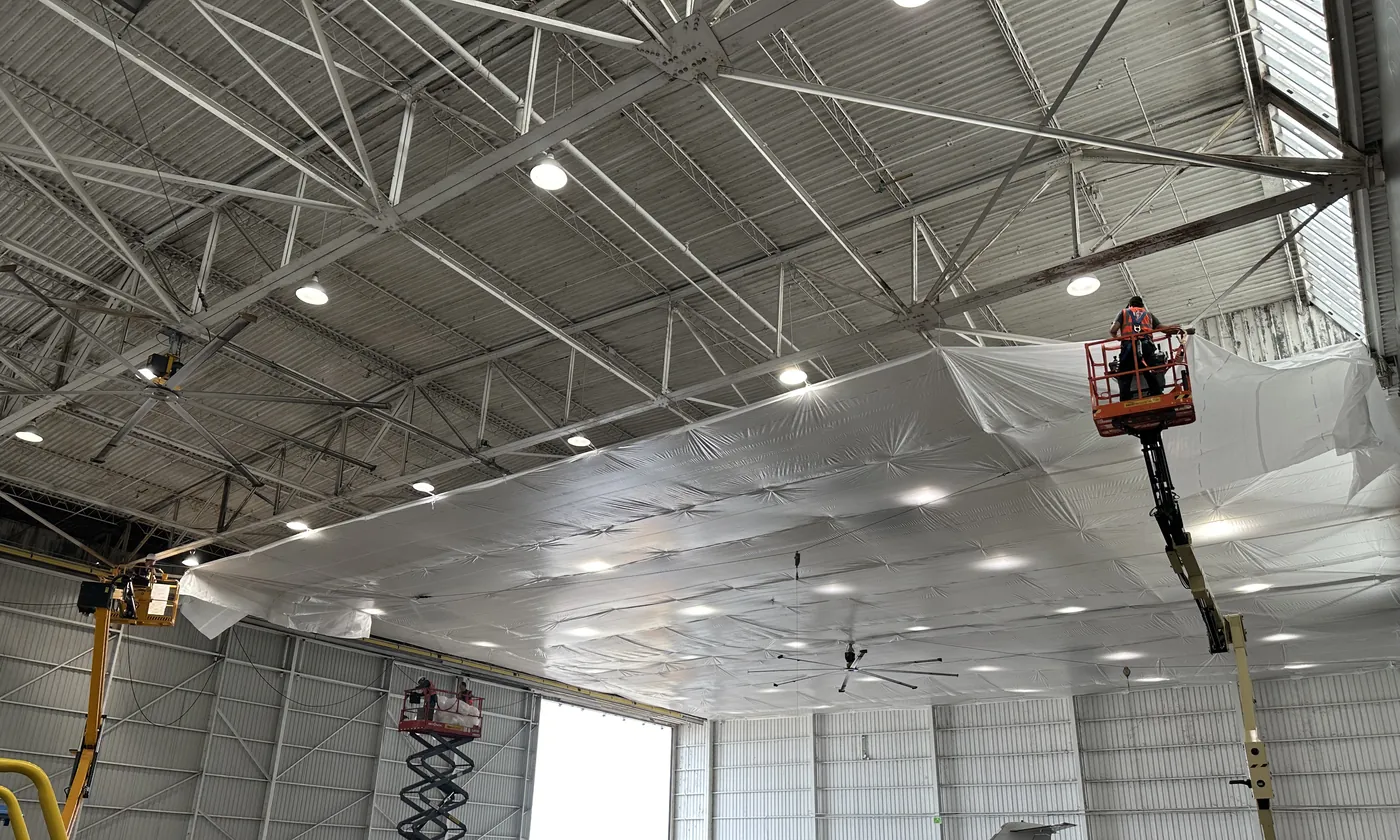
A commercial roof replacement usually happens over a building that stays open: warehouses shipping, stores open, and offices, medical practices and churches on their normal schedules.
The roof comes off in sections. We open only as much roof as the crew can close back up the same day, and no section is left open overnight.
Inventory, racking, equipment and ceilings under an open section get protected. Outside, the work zone is taped and coned off, with lifts and dumpsters kept away from entrances and docks where the site allows. Shutting down or covering rooftop units and air intakes near the work is the building owner’s responsibility, so arrange that before work starts.
Each building type adds its own version of this. Dock schedules are on warehouse and industrial roofing, store hours on retail and strip center roofing, and procedure rooms on medical office roofing.
You get dated photos as the roof comes off, showing the deck, any wet insulation and anything that changed the scope.
07
What a commercial roof replacement costs in Houston
A replacement price only means something next to the alternatives. These are Houston-market ranges, and every roof still gets priced in writing after it has been walked.
- Repair
- A standard repair generally runs $1,500 to $3,500, priced off the damage rather than per square foot. When the rest of the roof is sound, it is the cheapest answer.
- Membrane restoration
- $4.50 to $8.00 per square foot for a fluid-applied membrane over existing TPO, PVC, modified bitumen or built-up, with no tear-off. Only on a sound deck with dry insulation.
- Membrane tear-off and replacement
- $15 to $20 per square foot for the same roof, taken down to the deck, with wet insulation and damaged deck replaced.
- Metal restoration
- $3.75 to $5.00 per square foot for a fluid-applied restoration over metal panels that are rusted on the surface but still solid.
- Metal replacement
- $7 to $12 per square foot for new panels, trim and fasteners.
- Metal retrofit
- $6.50 to $8.00 per square foot for TPO over the existing metal, and $9 to $12 for PVC. The panels stay on.
That gap is why we check first. On a large roof it can decide whether the project gets approved this year or next.
Where a replacement lands in its range comes down to how many roofs come off, how much insulation and deck need replacing, tapered insulation, and the system. The count of curbs, drains and walls moves it too, because that is hand work. A recover generally comes in below a tear-off. Structural engineering and HVAC work sit outside the roofing price.
Want repair, restoration and replacement priced for your building?
Tell us the building and what is up there, and we will walk it and put the real options side by side, in writing.
08
What the proposal should contain
Two bids for the same roof can be far apart, and often one of them has left something out. A commercial roof replacement proposal should put all of this in writing.
- The scope
- Tear-off or recover and why, with the core cuts and photos behind it, and how many existing roofs come off.
- The system
- The manufacturer and membrane named, with its thickness and how it is attached.
- What goes under it
- The insulation and any cover board named, and a tapered layout for this roof if drainage is being fixed.
- Unit prices for what is hidden
- A price per square foot for wet insulation and damaged deck found once the roof is open, so a change is priced before it happens.
- The details
- Flashing at walls and curbs, drains, edge metal and coping, and raising curbs and units if needed.
- The warranty
- Whose warranty it is, material only or full system, the term and the exclusions.
- The plan for the building
- Staging, interior protection, how the roof gets opened and closed each day, and who you call during the job.
- What is not included
- Structural engineering, HVAC work and anything else by others, listed.
In Galveston County, Brazoria County and the parts of Harris County east of State Highway 146, a re-roof can need Texas windstorm certification (WPI-8) for TWIA coverage. We do WPI-8 certified work. Ask about it before the work is scheduled.
Our proposals come with the photos behind the recommendation. If the walk shows the roof is not done yet, the proposal says that instead.
Who you are dealing with
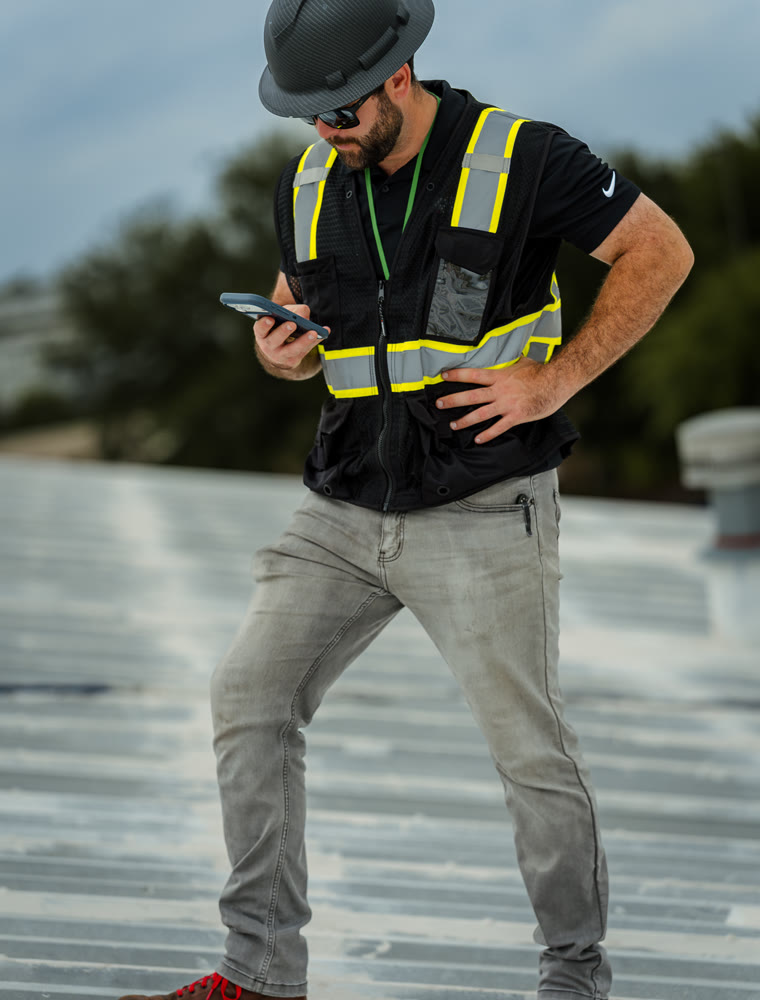
Coons Roofing is a commercial-only roofing contractor working across the Houston metro. It is owned and run by Wade Coons, who is on every project from the first roof walk to the final walkthrough. There is no salesman between you and the person who looked at your roof.
Certified applicator for Versico, FiberTite, Duro-Last, Karnak, IPC, Western Colloid, Elevate and GAF. Fully insured with general liability and workers compensation coverage.
09
Commercial roof replacement FAQs
How much does a commercial roof replacement cost in Houston?
In the Houston market, a tear-off and replacement of a membrane roof runs $15 to $20 per square foot. Restoring the same roof, where the deck is sound and the insulation is dry, runs $4.50 to $8.00. On metal, a replacement runs $7 to $12 per square foot, against $3.75 to $5.00 for a fluid-applied restoration. Every roof gets priced in writing after it has been walked.
How do I know if my commercial roof needs to be replaced?
When the problem is under the membrane or across the whole roof. That means wet insulation across large sections, a soft or rusted-through deck, membrane splitting across the field, or too many roofs already on the building. If the damage is at the details and the insulation is dry, repair or restoration costs far less. Core cuts settle which one you have.
Can a new roof go over my existing commercial roof?
Sometimes. That is a recover, and it needs a sound, dry base. Building codes generally do not allow a recover over a water-soaked or badly deteriorated roof, or where the building already has two or more roofs on it. Core cuts show how many roofs are up there and whether the insulation is wet.
Can you put a TPO or PVC roof over an existing metal roof?
Yes, when the metal panels and the framing under them are sound. Insulation fills the gaps between the ribs, board goes over it fastened to the framing, and the membrane goes on top. The metal stays, so the building is never opened up. On sound steel we generally prefer a retrofit to new panels. TPO runs $6.50 to $8.00 per square foot and PVC $9 to $12, priced next to a fluid-applied restoration so you can compare.
Can the building stay open during a commercial roof replacement?
Usually, yes. The roof comes off in sections, and only as much is opened as can be closed back up the same day. Shutting down or covering units and air intakes near the work is up to the building owner. If the space underneath is sensitive, like a procedure room or a server room, tell us before the schedule is set.
What areas do you cover for commercial roof replacement?
Houston, TX and the wider metro, including Galveston and Brazoria counties. That includes Katy, Sugar Land, Stafford, The Woodlands, Spring, Cypress, Tomball, Conroe, Pearland, League City and Pasadena, along with the industrial buildings around the Ship Channel. Form inquiries get an answer within 24 hours, usually the same day. Commercial buildings only.

Been told your roof needs replacing?
Get it checked before you price it. We walk the roof, check what is under the membrane, and show you the options side by side with photos. If it is not done yet, we will tell you.
10
Where we work across the metro
We cover Harris, Fort Bend, Montgomery, Galveston, Brazoria, and Waller counties. Pick your city for local detail on what we see on roofs there.
Related services

Schedule a free roof assessment
We'll walk your roof, take photos, and give you straight answers. The assessment is free when we are quoting the work.
We reply within 24 hours, usually the same day. No pressure, no sales visit you did not ask for, and we never sell your information.